From Dishwasher to Landlord in Eight Years: A Haitian Immigrant’s Real Estate Journey
Jean-Pierre Estimé arrived in Miami on a Tuesday in October.
He had $600 in his wallet, a phone number for a cousin he had not seen in four years, and a single carry on bag that held everything he had decided to bring across the ocean. He was 29 years old. He spoke Haitian Creole, French, and enough English to get through the airport without assistance, though not enough yet to follow a full conversation at normal speed.
His cousin lived in a two bedroom apartment in Little Haiti with his wife and their two children. Jean-Pierre slept on an air mattress in the living room for the first three months.
He found his first job within two weeks. He was washing dishes at a Haitian restaurant six days a week, eight hours a day, earning $11 per hour. After taxes, that was approximately $1,540 per month. After contributing to household expenses and sending $200 home to his mother every month, he had roughly $400 left over.
He put $350 of it into a savings account every month without exception.
That decision, made in the third week of his life in the United States, is where the story of how he became a landlord actually begins.
Year One: Learning the System Before Trying to Win It
Jean-Pierre will tell you that the most important thing he did in his first year was not the saving. Saving was the habit. The most important thing was the learning.
“I did not understand anything about how money worked here,” he said. “In Haiti, you save cash. You keep it somewhere safe. Here, I found out that the cash is actually losing value while it sits there, and the people who build wealth are doing something different with their money.”
He discovered this through a combination of YouTube videos in French and English, a library card he obtained in his second month, and a coworker named Marcus who had been in the US for eleven years and treated every question Jean-Pierre asked as worth a thorough answer.
By the end of his first year, Jean-Pierre understood the following:
His savings account earned interest. A high yield savings account would earn more. He opened one.
His paycheck was being reduced by deductions he had not understood. He read our blog post on pay stubs and finally understood what FICA and FWT and Medicare actually meant. That knowledge did not increase his pay, but it eliminated the monthly anxiety of not knowing where his money was going.
The US had a credit system that determined access to loans, apartments, and financing. He had no credit score. He needed to build one.
He applied for a secured credit card. He charged his monthly grocery run to it. He paid it in full every month without exception. Within eight months, he had his first credit score: 632.
Year Two: The First Real Job and the First Real Investment
In his second year, Jean-Pierre moved out of his cousin’s living room, found a roommate from his church, and together they rented a small two bedroom apartment for $1,400 per month. His share was $700. That freed up more of his income.
He also got a new job. A friend from the restaurant told him about a warehouse position at a logistics company in Hialeah. The hourly rate was $17.50. He applied, passed the interview, and started the following Monday.
The pay increase was significant. After taxes, he was taking home approximately $2,100 per month. He kept his lifestyle exactly the same as it had been when he was making $1,540. The additional $560 per month went entirely into savings.
At the end of year two, he had approximately $8,400 in savings, a credit score of 680, and his first conversation with a Haitian American financial advisor he found through a referral from someone at his church.
The advisor told him something that changed his thinking about what was possible.
“He told me that with my credit score and my savings, I could potentially qualify for an FHA loan. He explained what an FHA loan was. He showed me that with 3.5% down on a $200,000 property, I would need $7,000 plus closing costs. I had enough. I was not ready yet, but I had enough.”
He did not buy anything that year. He kept saving. He kept reading.
Year Three: The Education Continues
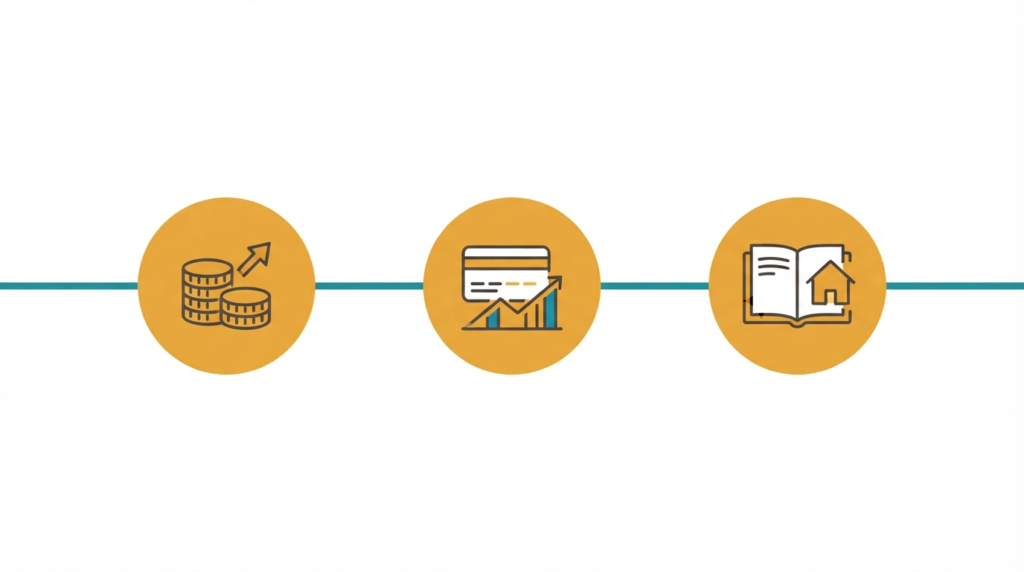
What this image shows: Jean-Pierre’s first three years followed a clear three-stage preparation path: building savings consistently, building US credit from zero, and educating himself about the US real estate and lending system. Each stage enabled the next. None of them required high income. All of them required discipline and information.
Jean-Pierre spent his third year doing something that many people skip in their rush to act: he learned the system before trying to enter it.
He attended three free first time homebuyer workshops offered by a HUD approved housing counseling agency in Miami. These workshops are free and specifically designed for people who are new to the US mortgage process. They covered credit requirements, the difference between FHA and conventional loans, what lenders look for when evaluating an application, and how to read a property listing and an inspection report.
“I went three times. The first time, I understood maybe 40% of what they said. The second time, closer to 70%. The third time, I understood everything.”
He also started visiting open houses on weekends. Not to buy, but to see. To understand what $180,000 bought in different neighborhoods. What $220,000 bought. What the difference looked like between a property that needed work and a property that was move in ready.
By the end of year three, his savings had grown to $14,200. His credit score had reached 714.
He was almost ready.
Year Four: The First Property
Jean-Pierre bought his first property at the age of 33, four years after arriving in Miami with $600.
It was a two bedroom, one-bathroom house in a neighborhood about 12 miles north of Little Haiti. The purchase price was $187,000. He used an FHA loan, putting 3.5% down, which was $6,545. Closing costs added another $4,200. Total out of pocket at closing: $10,745.
His mortgage payment was $1,260 per month, including principal, interest, taxes, insurance, and the FHA mortgage insurance premium. This was less than the $1,400 per month he had been paying for half of a two bedroom apartment.
He moved into the house. He rented the second bedroom to a coworker from the warehouse for $650 per month.
His effective housing cost: $610 per month. Less than he had been paying. For a house he owned.
“The first month I got that $650, I sat with it for a while before I deposited it. I thought: this is what it feels like to be a landlord. Even if it is just one room. Even if the house is small. Someone is paying me rent. I am on the other side now.”
He continued working at the warehouse. He did not change his lifestyle. He rebuilt his savings aggressively, now with the goal of eventually buying a second property.
Year Five and Six: Equity, Refinancing, and the Second Property
Something was happening to property values in Miami that Jean-Pierre had not predicted but had positioned himself to benefit from.
The neighborhood where he had bought his house began to appreciate significantly. Properties that were selling for $180,000 to $200,000 when he bought were now trading at $240,000 to $270,000. His $187,000 house was worth approximately $255,000 within two years of purchase.
He had accumulated equity without doing anything other than making his mortgage payments on time.
He visited a mortgage broker to understand his options. The broker explained two paths. He could refinance the property at the new value, eliminating the FHA mortgage insurance premium and reducing his monthly payment slightly. Or he could eventually do a cash out refinance, pulling out a portion of the equity to use as a down payment on a second property.
He chose to wait. He continued saving. He refinanced to a conventional loan, removing the mortgage insurance premium and saving $98 per month, and he kept his lifestyle unchanged.
By the end of year six, his house was worth approximately $275,000. His mortgage balance was approximately $168,000. His equity was approximately $107,000. His savings account held $22,000. His credit score had reached 748.
He began looking for his second property.
He found it through a connection at his church: a duplex in a working class neighborhood where both units were currently rented. The owner, an older Haitian American man who was retiring to Florida’s west coast, was willing to sell to a community member he trusted before listing it publicly. Purchase price: $268,000.
Jean-Pierre did a cash out refinance on his first property, pulling out $65,000 of equity while keeping significant equity remaining in the property. Combined with his savings, he had enough for a 20% down payment on the duplex, which meant no mortgage insurance and a conventional loan at a competitive rate.
He closed on the duplex 14 months later. Monthly rental income from both units: $2,100. His mortgage payment on the duplex: $1,390. Monthly net before maintenance and vacancy reserves: $710.
He was now collecting rent on two properties.
Year Seven: The System Running Itself
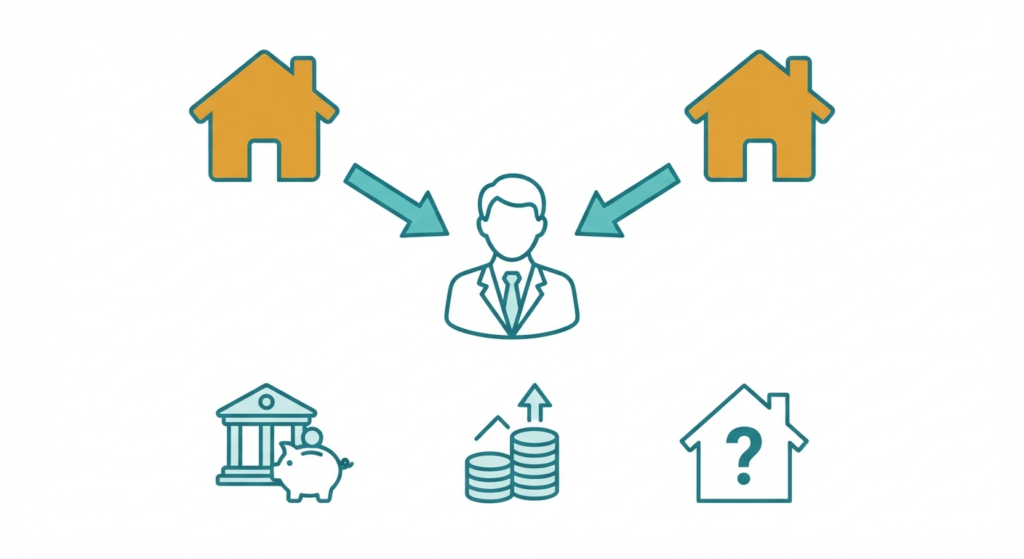
What this image shows: By year seven, two properties are generating income that flows back to Jean-Pierre. That income, combined with continued savings from his regular job, is accumulating toward the down payment on a third property. The wealth building system has become partially self funding, with rental income contributing to the next purchase.
By year seven, something had shifted in the structure of Jean-Pierre’s financial life.
His warehouse job was still his primary income. He had been promoted twice and was now earning $23 per hour, working as a shift lead. His take home pay was approximately $2,900 per month.
His rental income from the duplex was netting approximately $600 per month after accounting for a vacancy reserve and a maintenance reserve he set aside each month without touching unless needed.
His first house, where he still lived with his renter in the second bedroom, cost him $610 per month effective housing cost after the rental income.
Total monthly income between salary and rentals: approximately $3,500 net. Monthly expenses, all in: approximately $2,100. Monthly surplus: approximately $1,400.
That surplus was going into two places. Half into a high yield savings account building toward the next property. Half into a Roth IRA he had opened two years earlier, investing in a total market index fund.
“I remember thinking: I am not rich. I am not anywhere close to rich. But I am no longer surviving. I am building. That is different.”
Year Eight: The Third Property and a New Perspective
Jean-Pierre bought his third property in the spring of year eight. A three bedroom house in a neighborhood adjacent to where he had bought his first, purchased at $295,000 with 20% down. He rented it immediately to a family he knew through his church at $1,850 per month, which covered the mortgage plus generated a small positive cash flow.
He now held three properties. One he lived in with a renter covering more than half his mortgage. Two investment properties generating positive cash flow.
His net worth, calculated for the first time with the help of a CPA he now employed for tax preparation, was approximately $340,000. The majority was equity in real estate. A growing portion was in his Roth IRA. A portion was liquid savings.
He was 37 years old. He had arrived in Miami at 29 with $600.
When asked what advice he would give to a newly arrived immigrant thinking about real estate, he pauses before answering.
“The mistake most people make is they wait until they feel ready. They think they need more money, more knowledge, more time here. What they actually need is to start learning and start saving before they feel ready. The readiness comes from doing the first thing, not from waiting for a feeling.”
He also says this:
“People see where I am now and they think I was lucky, or I had help, or something went right for me that doesn’t go right for everyone. But I was washing dishes six days a week for $11 an hour and putting $350 in a savings account. That is the beginning. The beginning is boring. The beginning is completely ordinary. And the beginning is the whole thing.”
What Made Jean-Pierre’s Journey Possible: The Financial Foundations
Jean-Pierre’s story is compelling partly because it is specific and partly because the foundations underneath it are replicable. Here is what actually made it work.
Consistent saving from the first paycheck. Not when income improved. Not when the roommate situation stabilized. From the very first month, a fixed percentage went to savings before anything else. For a deeper look at how to build that habit, our guide on how to save money as a new immigrant in America covers the specific strategies that work on a tight income.
Credit building started early. A secured credit card in month eight of his first year. Monthly full payment without exception. Credit score 632 after eight months. 714 after three years. 748 after six years. Each threshold unlocked different financial options. Our article on how I built my US credit score from zero walks through exactly the same path.
House hacking from day one. Renting the second bedroom immediately reduced his effective housing cost below what he had been paying in rent. This is one of the most underused wealth building strategies available to first time homebuyers, particularly immigrants who are comfortable with shared living from their first years in the US.
Patience with the equity. He did not touch the equity in his first house for years. He let it accumulate. When he finally used it, he used it as a tool to acquire income generating property, not to fund consumption.
Community as infrastructure. The church connection that led to the duplex. The referral to the financial advisor. The coworker who answered his questions in year one. Jean-Pierre’s network was not accidental. He invested in it consistently. In immigrant communities especially, the relationship between social capital and financial opportunity is direct and documentable.
The Roth IRA running in parallel. While building real estate equity, he was also building a tax free investment account. The two tracks, real estate and index fund investing, were not competing with each other. They were complementary, serving different purposes and different timelines.
For a complete picture of how real estate investing fits alongside other wealth building tools, our article on become a landlord with $100: passive real estate investing for new arrivals covers how immigrants can start building real estate exposure even before they are in a position to buy a property directly.
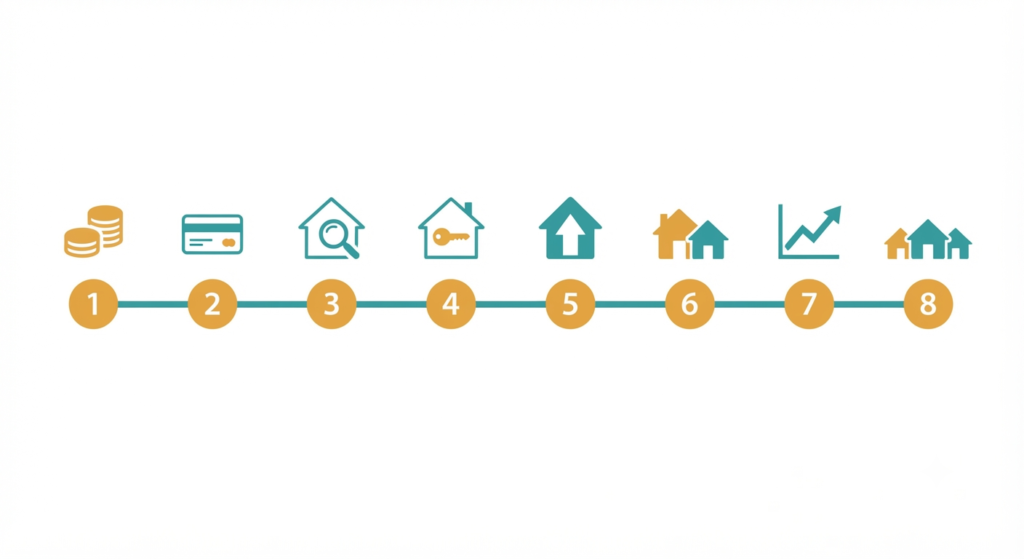
What this image shows: Jean-Pierre’s eight year path from newly arrived immigrant to three-property landlord followed eight clearly identifiable milestones. The journey was not linear in speed but was linear in direction: every year moved forward from the previous one, building on foundations laid in earlier years rather than starting over. The compounding effect was not just financial. It was also knowledge, relationships, and access.
The Numbers at a Glance
| Year | Key Milestone | Net Worth (approx.) |
|---|---|---|
| 1 | Savings habit established, secured credit card | $4,200 |
| 2 | Warehouse job, credit score 680 | $8,400 |
| 3 | Homebuyer education, open houses, credit score 714 | $14,200 |
| 4 | First property purchased (FHA loan) | $22,000 |
| 5 | Equity growing, first property appreciates | $75,000 |
| 6 | Second property (duplex) purchased | $185,000 |
| 7 | Rental income funding next purchase, Roth IRA | $255,000 |
| 8 | Third property purchased | $340,000 |
Jean-Pierre still works at the warehouse. He has not quit his job. He is not planning to yet. The rental income covers his personal expenses with room to spare, but he values the steady paycheck and the health insurance that comes with it while he continues to build.
He is thinking about a fourth property.
He is also thinking about his nephew, who arrived from Haiti six months ago and is sleeping on Jean-Pierre’s couch while he gets established.
He has been explaining savings accounts, credit cards, and FHA loans to his nephew in Creole on Sunday evenings.
The beginning of the next story looks very much like the beginning of his own.
Note: Jean-Pierre Estimé is a composite character based on the real financial journeys of multiple Haitian American immigrants in the Miami area. Specific figures are approximate and illustrative. Real estate outcomes vary significantly based on market conditions, timing, and individual circumstances. This article is for informational and inspirational purposes only and does not constitute financial or real estate advice.