
Secured Credit Cards for Beginners With No Credit History
Starting from zero is hard. But in America, starting from zero with no credit history is harder than most people expect.
You cannot get a credit card without credit. You cannot build credit without a credit card. You need a rental apartment but the landlord wants to see your credit score. You need a credit score but you have never had a single US account in your life.
If you are an immigrant, a young adult, or anyone who is brand new to the American financial system, this is the exact wall you are staring at right now.
Secured credit cards for beginners with no credit history are the key that opens that door. They are specifically designed for people who cannot qualify for a traditional credit card, and they are one of the most powerful and accessible tools available for building a US credit score from scratch.
In this guide we are going to walk through everything you need to know about secured credit cards: what they are, how they work, which ones are the best on the market right now, how to use one correctly to build your score as fast as possible, and which common mistakes to avoid.
By the end of this article you will know exactly which card to open, how to use it, and what to expect over the next six months.

What is a Secured Credit Card and How Does it Work
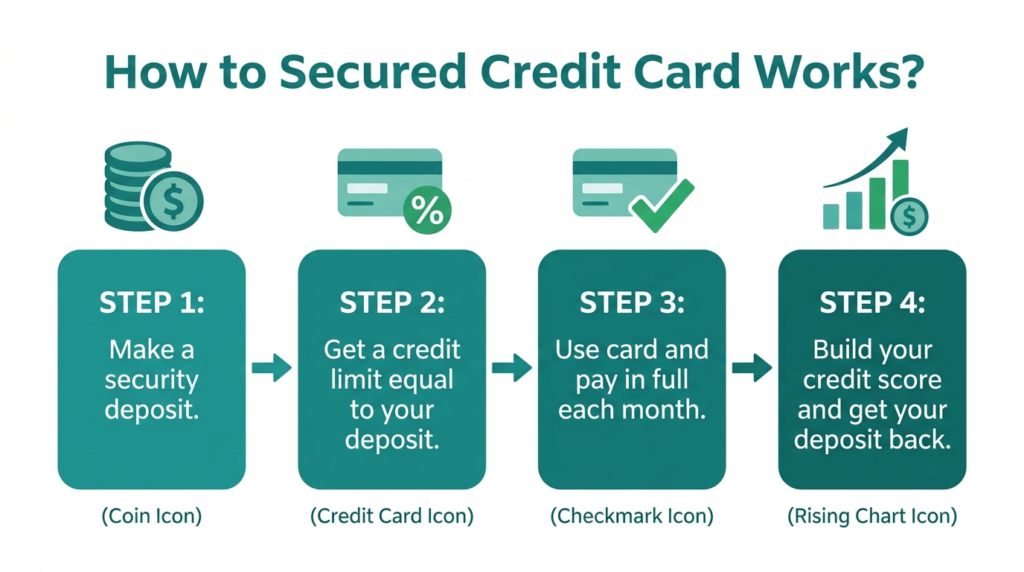
A secured credit card is a type of credit card designed specifically for people with no credit history or poor credit. It works almost identically to a regular credit card with one key difference: you are required to make a refundable security deposit upfront, and that deposit becomes your credit limit.
Here is a simple example. You apply for a secured credit card and deposit $300. Your credit limit is now $300. You use the card to make everyday purchases, pay your bill in full each month, and the card issuer reports your payment behavior to the three major US credit bureaus: Equifax, Experian, and TransUnion. Over time, consistent on time payments build your credit score.
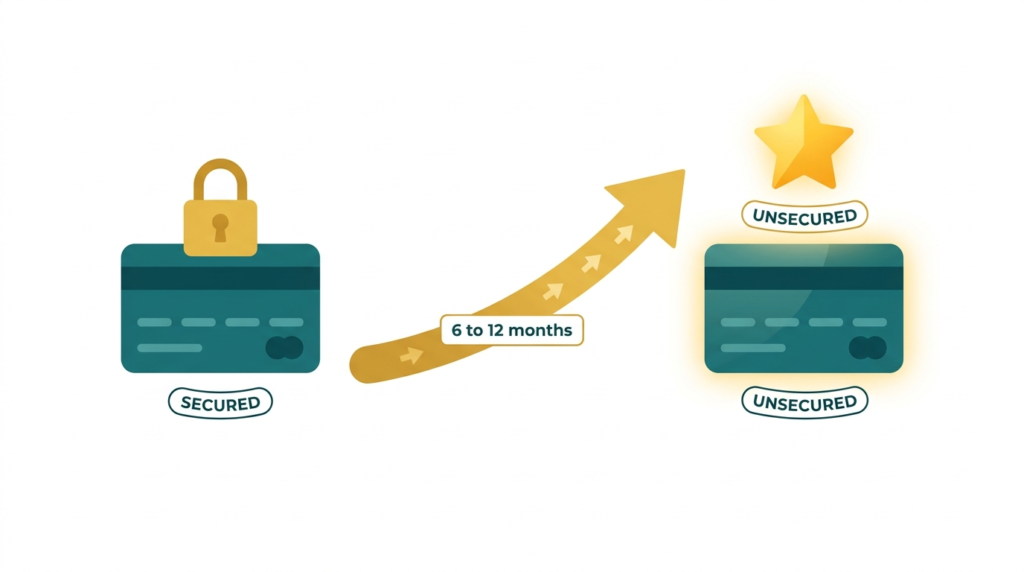
After several months of good behavior, many secured card issuers will review your account and upgrade you to an unsecured card, returning your deposit in full. At that point you have a real credit card, a growing credit score, and your money back.
That is the journey. And it works reliably for immigrants, newcomers, young adults, and anyone starting the US credit system from scratch.
Secured Credit Card vs Prepaid Debit Card: The Difference That Changes Everything
This is one of the most important distinctions in this entire article. Many immigrants and beginners confuse secured credit cards with prepaid debit cards, and that confusion can cost you months of credit building progress.
Here is the critical difference:
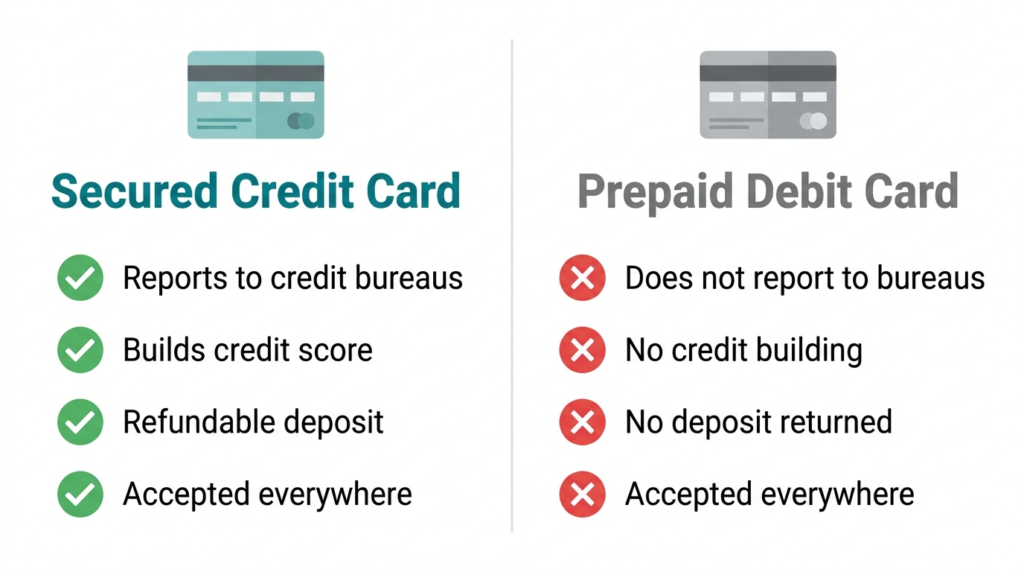
A secured credit card reports your payment history to the credit bureaus. Every payment you make, every month, goes onto your credit report. This is what builds your score.
A prepaid debit card does not report to the credit bureaus at all. You are just spending money that is already loaded onto the card. No credit history is created. No score is built. You could use a prepaid card for ten years and your credit score would remain at zero.
A secured credit card looks and functions like a regular credit card at the point of purchase. You can use it anywhere Visa or Mastercard is accepted. The difference is invisible to the merchant. The difference that matters is happening behind the scenes, where your payment behavior is being recorded and reported every single month.
Always confirm before opening any secured card that it reports to all three credit bureaus: Equifax, Experian, and TransUnion. Some cards only report to one or two bureaus, which limits how quickly and broadly your credit profile develops.
Who Should Get a Secured Credit Card
Secured credit cards are the right tool for a specific group of people. You should consider a secured credit card if any of the following describes your situation:
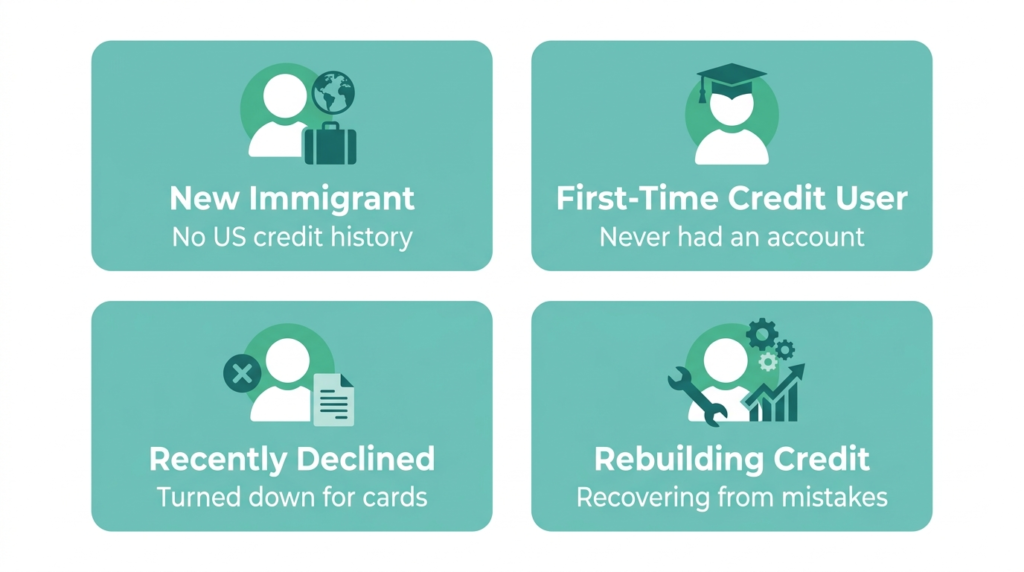
You are an immigrant new to the US financial system. Your credit history from your home country does not transfer to the United States. Regardless of how well you managed money back home, you start with a blank credit file in America. A secured card is your fastest path to changing that.
You are a young adult opening your first credit account. If you have never had a credit card, student loan, or any other credit account in the US, a secured card gives you a low risk way to start building history before you graduate to a rewards card.
You have been denied for a traditional credit card. Unsecured credit cards require an existing credit history. If you have been declined, a secured card is the designed alternative for exactly your situation.
You are rebuilding credit after financial difficulties. If your credit score has dropped due to missed payments, collections, or bankruptcy, secured cards are one of the most reliable tools for rebuilding.
You want a credit building tool with low risk. Since your credit limit equals your deposit, you cannot accidentally go into serious debt. The built in limit makes secured cards one of the safest credit products available for beginners.
The Best Secured Credit Cards for Beginners With No Credit History
Here are the top secured credit cards for people with no credit history, chosen specifically for their credit building effectiveness, low fees, and immigrant friendliness.
The Best Secured Credit Cards for Beginners With No Credit History
The Discover it Secured card consistently ranks as the best secured credit card for beginners with no credit history, and for good reason. It is the rare secured card that gives you real cash back rewards while you build your credit score, with a clear automatic path to upgrading to an unsecured card without ever needing to open a new account.
How it works: You deposit a minimum of $200, which becomes your credit limit. You use the card, pay your bill in full each month, and Discover automatically begins reviewing your account after seven months to determine if you qualify for an upgrade to an unsecured card and a return of your security deposit.
Key features:
- 2% cash back at gas stations and restaurants on up to $1,000 in combined purchases per quarter
- 1% cash back on all other purchases
- Discover matches all the cash back you earn in your first year, dollar for dollar
- No annual fee, ever
- No foreign transaction fee — ideal for immigrants who travel or send money internationally
- FICO score shown on your monthly statement at no cost
- Reports to all three major credit bureaus: Equifax, Experian, and TransUnion
- Automatic account review starting at seven months for potential upgrade to unsecured
- ITIN accepted for applications in many cases
Minimum deposit: $200 Annual fee: None Foreign transaction fee: None
Why it stands out: Almost no other secured card gives you cash back rewards while you build credit. The automatic upgrade review after seven months means you do not have to open a new account to graduate to an unsecured card. Your credit history on the Discover account continues uninterrupted, which protects the length of credit history factor on your score.
Capital One Platinum Secured Card: Best for the Lowest Possible Starting Deposit
If the $200 minimum deposit on other cards feels like a stretch right now, the Capital One Platinum Secured card is worth a close look. It is one of the only secured cards that may allow you to access a $200 credit limit with a deposit as low as $49 depending on your creditworthiness when you apply. That makes it one of the most accessible entry points into credit building for immigrants and beginners with limited starting funds.
How it works: You apply and Capital One determines your deposit requirement: $49, $99, or $200, all of which grant you an initial $200 credit limit. You use the card, pay your bill in full each month, and Capital One automatically considers you for a higher credit limit after six months of on time payments — with no additional deposit required.
Key features:
- Security deposit as low as $49 for a $200 credit limit
- No annual fee
- Automatic credit line review after six months of on time payments
- CreditWise tool included at no cost, lets you monitor your TransUnion credit score
- Reports to all three major credit bureaus
- ITIN accepted in many cases
- Path to upgrade to the Capital One Platinum unsecured card with good payment history
- Fraud coverage with $0 liability on unauthorized charges
Minimum deposit: $49 (your deposit may be $49, $99, or $200 — determined at application) Annual fee: None Foreign transaction fee: None
Why it stands out: The potentially lower deposit requirement is unique in the secured card market. For immigrants who need to carefully manage every dollar during their first months in the US, the ability to start building credit with as little as $49 out of pocket is a significant advantage.
Capital One Quicksilver Secured Cash Rewards Card: Best Secured Card for Flat Rate Cash Back
For beginners who want to earn rewards on every single purchase without tracking bonus categories, the Capital One Quicksilver Secured card is the strongest option on the market. It earns 1.5% cash back on every purchase, flat, with no rotating categories to remember. That is a straightforward and compelling proposition for a secured card.
Key features:
- 1.5% cash back on every purchase, no categories to manage
- No annual fee
- No foreign transaction fee — excellent for immigrants
- $200 minimum deposit
- Reports to all three major credit bureaus
- Automatic credit limit reviews after six months
- Path to upgrade to the unsecured Capital One Quicksilver card
- $0 fraud liability on unauthorized charges
Minimum deposit: $200 Annual fee: None Foreign transaction fee: None
Why it stands out: The flat rate rewards structure is ideal for beginners who do not want to think about which card to use for which purchase. 1.5% back on everything is genuinely competitive, even compared to some unsecured rewards cards.
OpenSky Secured Visa Credit Card: Best Secured Card With No Credit Check Required
The OpenSky Secured Visa card is in a category of its own because it requires absolutely no credit check to be approved. There is also no bank account required to apply. For immigrants who have been declined elsewhere, who do not yet have a US bank account, or who simply want a guaranteed path to approval without a hard inquiry affecting their thin credit file, OpenSky removes every barrier.
How it works: You apply online, there is no credit check, and you fund your security deposit by money order, Western Union transfer, or a bank transfer if you have an account. Your deposit of $200 or more becomes your credit limit and OpenSky reports your payment history to all three credit bureaus every month.
Key features:
- No credit check required to apply — guaranteed approval with a deposit
- No bank account required to fund your deposit
- Deposit of $200 to $3,000 accepted — higher deposit means higher credit limit
- Reports to all three major credit bureaus
- ITIN accepted for applications
- Credit line increases available after demonstrating consistent payments
- Annual fee of $35 (the tradeoff for no credit check access)
- OpenSky Community feature connects you with other cardholders building credit
Minimum deposit: $200 Annual fee: $35 Foreign transaction fee: 3%
Why it stands out: No credit check and no bank account requirement makes this the most accessible secured card on the market. For immigrants who have been declined by every other card or who are still in the process of opening a US bank account, OpenSky is often the only realistic starting point. The $35 annual fee is a reasonable price to pay for guaranteed entry into the credit building system.
How it works: You apply online, there is no credit check, and you fund your security deposit by money order, Western Union transfer, or a bank transfer if you have an account. Your deposit of $200 or more becomes your credit limit and OpenSky reports your payment history to all three credit bureaus every month.
Key features:
- No credit check required to apply — guaranteed approval with a deposit
- No bank account required to fund your deposit
- Deposit of $200 to $3,000 accepted — higher deposit means higher credit limit
- Reports to all three major credit bureaus
- ITIN accepted for applications
- Credit line increases available after demonstrating consistent payments
- Annual fee of $35 (the tradeoff for no credit check access)
- OpenSky Community feature connects you with other cardholders building credit
Chime Credit Builder Secured Visa Card: Best Free Secured Card With Zero Deposit
The Chime Credit Builder card is fundamentally different from every other card on this list and deserves its own category. There is no minimum security deposit, no annual fee, no interest charges ever, and no credit check required. You simply move money from your Chime checking account into a Credit Builder account, and that money becomes your spending limit. Chime reports your payments to all three credit bureaus exactly like a traditional secured credit card.
How it works: You open a free Chime checking account, set up direct deposit, and then you become eligible to open the Credit Builder card. You move money into the Credit Builder secured account, spend up to that amount using the card, and Chime automatically pays your balance from the secured funds each month. There is no interest because you are spending money you already have. Chime reports every payment to Equifax, Experian, and TransUnion.
Key features:
- No minimum security deposit — move in whatever you can afford
- No annual fee, ever
- No interest charges — you are spending your own money
- No credit check required to open
- Reports to all three major credit bureaus
- Requires a free Chime checking account with direct deposit set up
- Safe to Spend feature shows exactly how much you can spend without overdrawing
- No foreign transaction fee
Minimum deposit: None, you choose how much to move into the account Annual fee: None Interest rate: None
Why it stands out: For immigrants who want to start building credit with absolutely zero cost and zero risk of debt or interest charges, the Chime Credit Builder is unmatched. The only requirement is opening a free Chime checking account, which itself is one of the most immigrant friendly bank accounts available in the US.
Self Credit Builder Account with Secured Visa: Best for Building Credit and Savings Simultaneously
Self offers a unique product that combines a credit builder loan with a secured credit card. You start by opening a Self Credit Builder Account, which is an installment loan where you make monthly payments into a savings account. After making on time payments and building up enough in your savings, you become eligible for the Self Visa Secured Credit Card with no additional deposit required because your loan savings serve as collateral.
How it works: You open a Self Credit Builder Account starting at $25 per month. Self reports your monthly payments to all three credit bureaus as installment loan payments. Once your account reaches $100 or more and you have made at least three on time payments, you can apply for the Self Visa Secured Credit Card using your savings balance as the security deposit.
Key features:
- No hard credit check for the credit builder loan
- Reports both installment loan payments and credit card payments to all three bureaus
- Builds both your credit mix and your payment history simultaneously
- The secured credit card requires no additional deposit beyond your existing savings
- No foreign transaction fee on the Visa card
- Annual fee of $25 on the secured Visa card
- Savings are returned at the end of the loan term
Minimum deposit: None upfront, payments start at $25 per month Annual fee: $25 on the Visa card Why it stands out: Self is the only product on this list that builds both a credit card payment history and an installment loan history at the same time, which directly improves your credit mix factor and accelerates your score growth. It is also ideal for immigrants who do not yet have a lump sum to put down as a security deposit.
How To Use Your Secured Credit Card to Build Credit as Fast as Possible
Opening the right secured card is step one. Using it correctly is what actually builds your score. Many beginners open a secured card and then use it wrong, slowing down their progress significantly. Here are the rules that matter most.
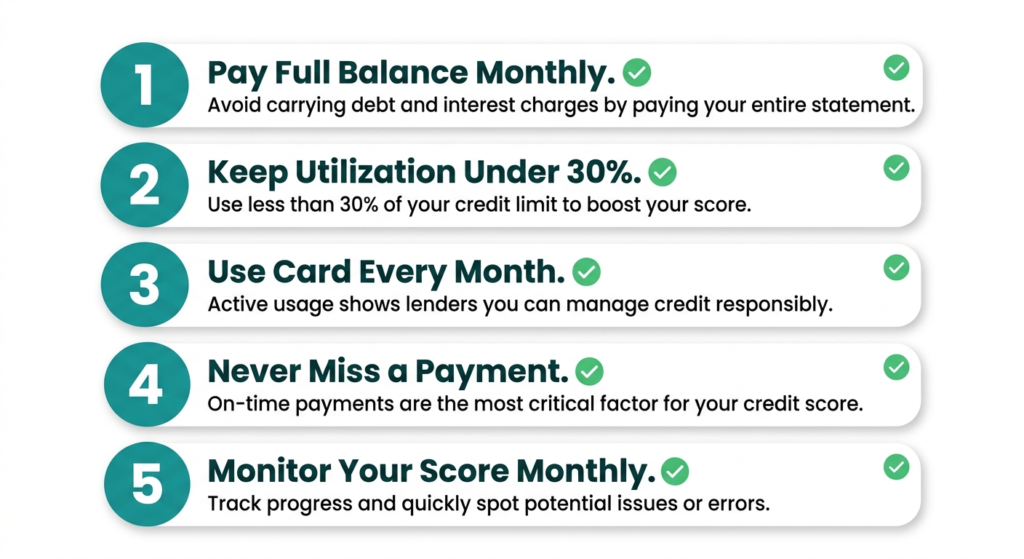
Rule 1: Pay Your Full Balance Every Single Month
This is the most important rule and it cannot be overstated. Pay your entire statement balance, not just the minimum payment, by the due date every single month without exception.
Carrying a balance from month to month does not help your credit score. That is a persistent myth. What it does is cost you interest charges, which can be significant on secured cards. The habit of paying in full every month is what builds the payment history that accounts for 35% of your FICO score.
Set up autopay for the full statement balance the moment you receive your card. Do not rely on memory alone.
Rule 2: Keep Your Credit Utilization Below 30%
Credit utilization is the second biggest factor in your credit score at 30% of your total FICO calculation. It measures what percentage of your available credit limit you are currently using.
If your secured card has a $300 credit limit, keeping your balance below $90 when your statement closes is the goal. Below $30 (10% or less) is even better and will accelerate your score growth.
Here is the part most beginners do not know: the bureaus take a snapshot of your balance on your statement closing date, not on your payment due date. If you spend $250 on a $300 limit card during the month and pay it off before the due date, but your statement already closed showing $250, your reported utilization is 83%. That will hold your score back even though you technically paid in full.
The solution: pay down your balance a few days before your statement closing date each month, not just before the payment due date.
Rule 3: Use Your Card Every Month Without Fail
A secured card that never gets used can be flagged as inactive and eventually closed by the issuer. A closed account hurts your score in two ways: it reduces your available credit and can lower your average account age.
Use your secured card for at least one small purchase every month. A streaming subscription, a tank of gas, or a single grocery run is enough. The key is that the account stays active and the usage stays low.
Rule 4: Never Miss a Single Payment
One missed payment can drop your score by 60 to 110 points and stays on your credit report for seven years. That is a significant and long lasting setback for someone who is just beginning to build their history.
Set up autopay for the minimum payment as an absolute safety net, then manually pay the full balance before the due date each month. Calendar reminders and autopay together give you two layers of protection.
Rule 5: Monitor Your Credit Score Monthly
Sign up for a free credit monitoring service from day one. Credit Karma shows you your scores from TransUnion and Equifax updated weekly for free. Experian shows you your FICO score directly, also for free.
Monitoring your score monthly lets you track your progress, catch errors on your report immediately, and understand which factors are helping or holding you back. Many secured card issuers also show your FICO score on your monthly statement at no cost, Discover and Capital One both do this.
What To Expect: Your Credit Score Timeline
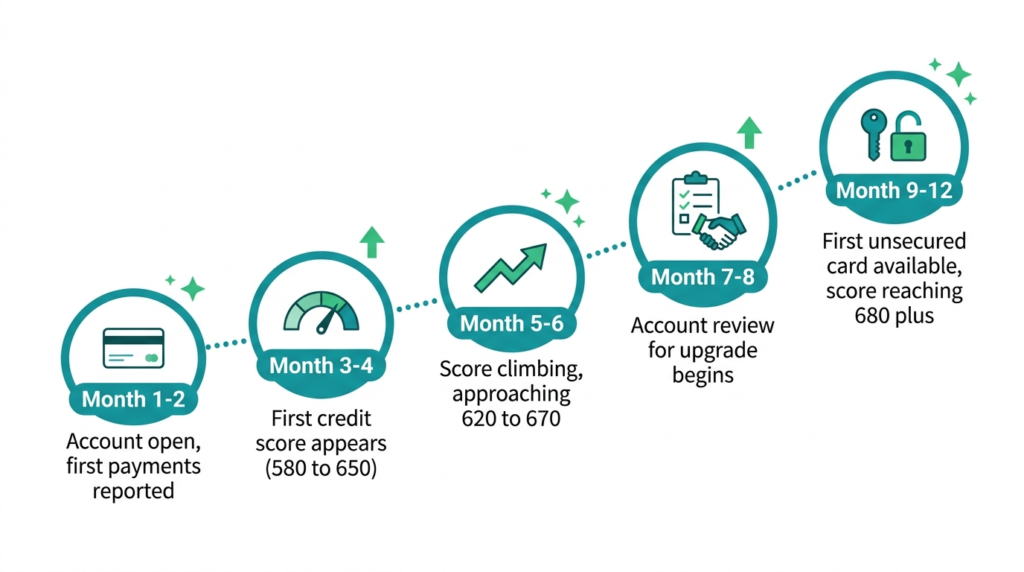
One of the most common questions from beginners is how long it actually takes to see results. Here is a realistic timeline based on what happens when you follow the rules consistently:
Month 1 to 2: Your account is open and your first payment has been reported to the credit bureaus. You may not have a score yet during this period because most scoring models require at least one account with at least six months of history before generating a score. This is normal. Keep paying on time.
Month 3 to 4: Your first credit score appears, typically somewhere between 580 and 650 depending on your overall credit profile. This is your starting point. It may feel low but it is a real score and it will move upward as your history grows.
Month 5 to 6: With consistent on time payments and low utilization, your score should be climbing steadily. Many beginners reach the 620 to 670 range by the end of six months. At this point, some issuers will begin reviewing your account for a credit limit increase or upgrade.
Month 7 to 12: Discover begins automatic account reviews at seven months. Capital One reviews at six months. With a score approaching or above 670, your first unsecured credit card becomes a realistic option. The Capital One Platinum unsecured card and the Petal 1 Visa are both designed for people at this stage.
Month 12 to 24: With a year of clean payment history and low utilization, your score could be approaching the Very Good range (740 plus). At this point premium rewards cards, lower insurance rates, and easier apartment approvals all become available to you.
Common Mistakes That Slow Down Your Credit Building Progress
Knowing what not to do is just as important as knowing what to do. Here are the mistakes that beginners make most often with secured credit cards.
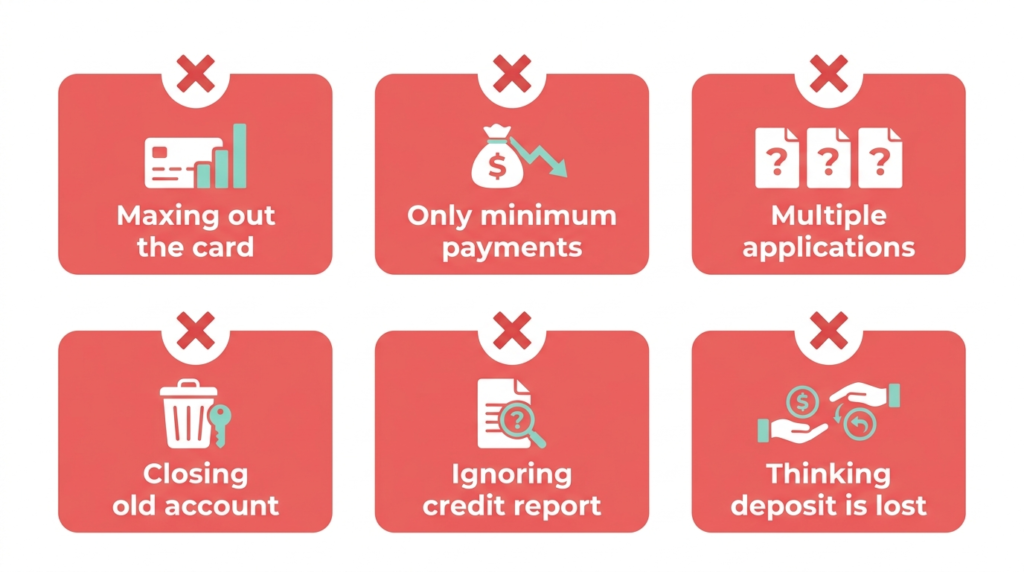
Mistake 1: Treating the card like a debit card and maxing it out. Spending your full credit limit every month, even if you pay it off, creates high utilization on your statement closing date. Keep your spending to 10% to 30% of your limit at all times.
Mistake 2: Making only the minimum payment. Minimum payments protect you from late fees but they do not accelerate credit building. They also allow interest to accumulate on your balance. Always pay the full statement balance.
Mistake 3: Applying for multiple cards at once. Every application creates a hard inquiry on your thin credit file, temporarily lowering your score. Start with one secured card. That is all you need in the beginning.
Mistake 4: Closing the secured card after upgrading. When you graduate to an unsecured card, keep your secured card open if there is no annual fee. Its account age continues to work in your favor for years. Closing it reduces your available credit and average account age, both of which can temporarily lower your score.
Mistake 5: Not checking your credit report for errors. Errors on credit reports are surprisingly common and can drag your score down for months before you notice. Check your reports from all three bureaus at AnnualCreditReport.com at least every four months.
Mistake 6: Assuming the deposit is gone forever. Your security deposit is refundable. When you upgrade to an unsecured card or close your account in good standing, you get your full deposit back. It is not a fee. It is collateral held temporarily while you establish trust with the issuer.
Side by Side Comparison: Which Secured Card is Right for You
| Card | Min Deposit | Annual Fee | Cash Back | No Credit Check | Best For |
|---|---|---|---|---|---|
| Discover it Secured | $200 | None | 2% gas and dining, 1% other | No | Best overall, rewards and upgrade path |
| Capital One Platinum Secured | $49 to $200 | None | None | No | Lowest deposit requirement |
| Capital One Quicksilver Secured | $200 | None | 1.5% on everything | No | Simple flat rate rewards |
| OpenSky Secured Visa | $200 | $35 | None | Yes | Guaranteed approval, no bank account needed |
| Chime Credit Builder | None | None | None | No | Zero cost credit building |
| Self Secured Visa | None upfront | $25 | None | No | Credit building and savings together |
Next Steps After Your Secured Card: Graduating to Unsecured Credit
Once your credit score reaches the 620 to 670 range, which most beginners can achieve within six to twelve months of consistent secured card use, you become eligible for your first unsecured credit card. Here are the best options for that next step:
Capital One Platinum (unsecured): The natural next step after the Capital One Platinum Secured card. No deposit required, no annual fee, and automatic credit limit increases over time.
Petal 1 Visa (unsecured): A card specifically designed for people building credit. Petal uses bank account and cash flow data in addition to credit history to evaluate applications, making it one of the most immigrant friendly unsecured cards available.
Discover it Student Cash Back: If you are a student, this card offers the same rewards structure as the Discover it Secured but as an unsecured card with no deposit required.
The Bottom Line
Secured credit cards for beginners with no credit history are not a compromise. They are a deliberate, powerful first step into the American financial system — one that can transform your credit profile within six to twelve months if you use them correctly.
The best card for most beginners is the Discover it Secured card: no annual fee, real cash back rewards, and a proven automatic upgrade path make it the strongest overall option. If you need the lowest possible starting deposit, the Capital One Platinum Secured card can get you started with as little as $49. If you want guaranteed approval with no credit check and no bank account required, the OpenSky Secured Visa removes every barrier. And if you want to start at zero cost with zero risk of debt, the Chime Credit Builder is in a class of its own.
Whatever card you choose, the rules are the same: pay in full every month, keep your utilization low, use the card every month for a small purchase, never miss a payment, and monitor your score monthly so you can watch your progress.
Six months from today you could have a real US credit score. Twelve months from today you could be holding your first unsecured credit card. Two years from today your credit score could be opening doors that felt impossible when you first arrived.
It starts with one card and one payment.
Which secured card are you considering? Drop your questions in the comments and I will help you decide which one is right for your situation.
Disclaimer: This article contains affiliate and referral links. If you apply or sign up through these links, I may earn a commission at no extra cost to you. All card recommendations are based on genuine evaluation of features that benefit immigrants and beginners building credit from zero. This is not financial advice. Please review all terms and conditions before applying for any credit product.