How To Build Credit From Zero in 6 Months
Six months. That is all it takes to go from having no credit history in the United States to having a real, measurable credit score that landlords, lenders, and banks will actually respect.
If you are an immigrant, a recent graduate, or anyone who has never had a US credit account before, you already know the frustration. You need credit to get an apartment, but you need an apartment to have an address, and you need a credit history to get credit in the first place. The system feels like a locked door with the key on the inside.
But here is the truth that most people do not tell you: building credit from zero in the US is one of the most learnable financial skills there is. It is not about income. It is not about connections. It is about understanding exactly how the system works and using a handful of simple tools consistently over time.
This guide will walk you through exactly how to build credit fast as an immigrant or newcomer, which products to use, which mistakes to avoid, and what your credit score timeline actually looks like when you do everything right. Let us get into it.

What Is a Credit Score and Why Does It Matter So Much in the US
Before we talk about how to build credit in the United States, it helps to understand exactly what a credit score is and why the American system treats it as such a significant number.
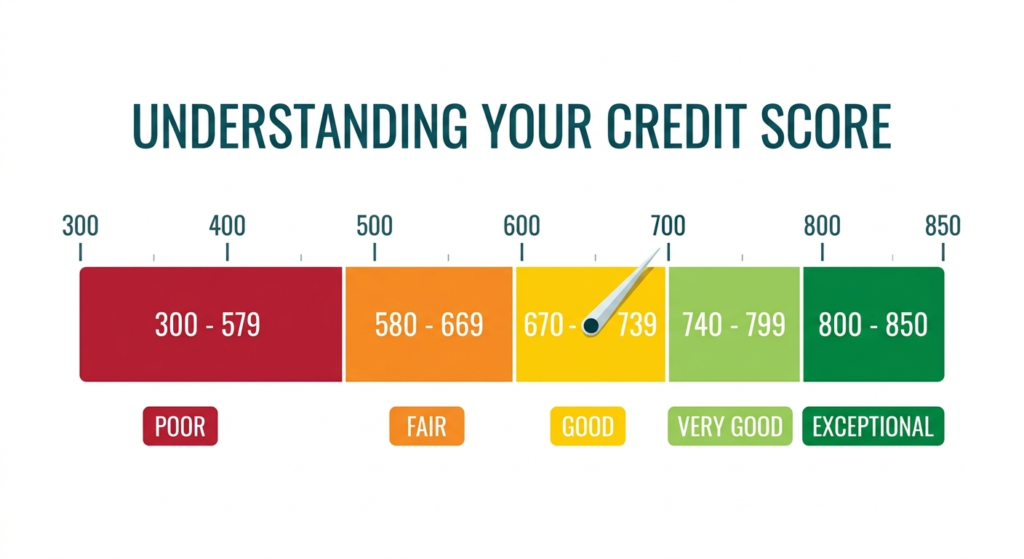
Your credit score is a three digit number between 300 and 850. It is calculated by three major credit bureaus: Equifax, Experian, and TransUnion. These bureaus collect information about how you manage debt and repayment obligations, then use that information to assign you a score.
Here is what each score range means in practice:
| Score Range | Rating | What It Means |
|---|---|---|
| 800 to 850 | Exceptional | Best rates on everything |
| 740 to 799 | Very Good | Near best rates available |
| 670 to 739 | Good | Most lenders approve you |
| 580 to 669 | Fair | Limited options, higher rates |
| 300 to 579 | Poor | Very limited access to credit |
| No score | No file | You do not exist to lenders yet |
That last row is where most immigrants and newcomers start. Having no credit file is sometimes called being credit invisible, and it affects an estimated 45 million Americans, many of whom are immigrants or young adults.
The good news is that moving from credit invisible to a score in the Good range is entirely possible within six months if you follow the right steps consistently.
How Your Credit Score Is Actually Calculated
Understanding credit score factors is one of the most powerful things you can do before you start building. When you know what moves the needle, every financial decision becomes more intentional.
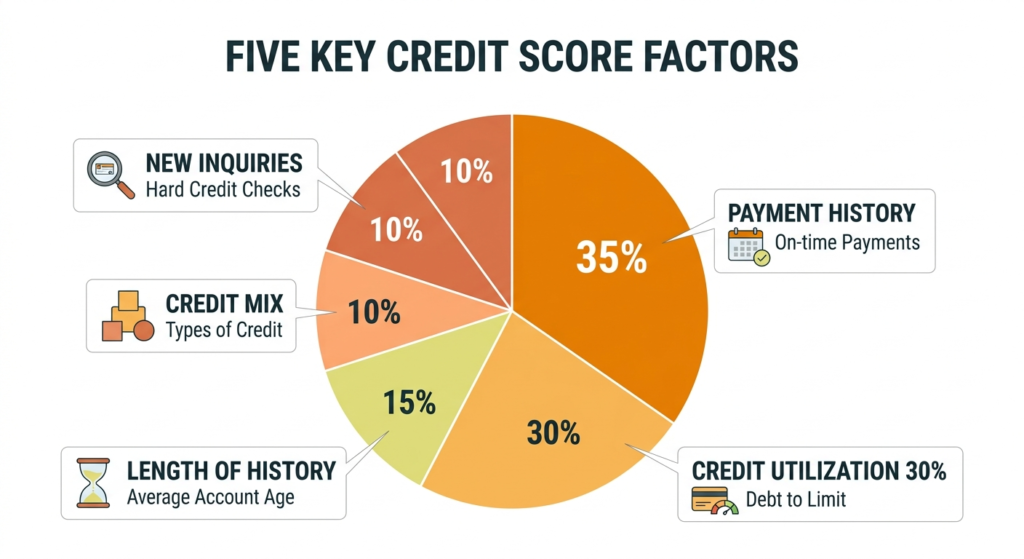
Your FICO score, which is the most widely used credit scoring model in the US, is calculated using five factors:
Payment History: 35% of your score This is the single biggest factor. Paying every bill on time, every month, is the most powerful thing you can do. One missed payment can drop your score significantly and stay on your report for seven years.
Credit Utilization: 30% of your score This is the percentage of your available credit that you are actually using. If your credit limit is $500 and you carry a $250 balance, your utilization is 50%, which is too high. Keeping your utilization under 30% is the general rule. Under 10% is even better.
Length of Credit History: 15% of your score The longer your accounts have been open, the better. This is why opening your first credit account as early as possible matters so much. Every month your account stays open and in good standing adds to this factor.
Credit Mix: 10% of your score Having different types of credit accounts, such as a credit card and a credit builder loan, shows lenders you can manage multiple forms of credit responsibly.
New Credit Inquiries: 10% of your score Every time you apply for new credit, the lender does a hard inquiry on your report, which can temporarily lower your score by a few points. Apply for new credit sparingly, especially in the first year.
Your 6 Month Credit Building Plan: Month by Month
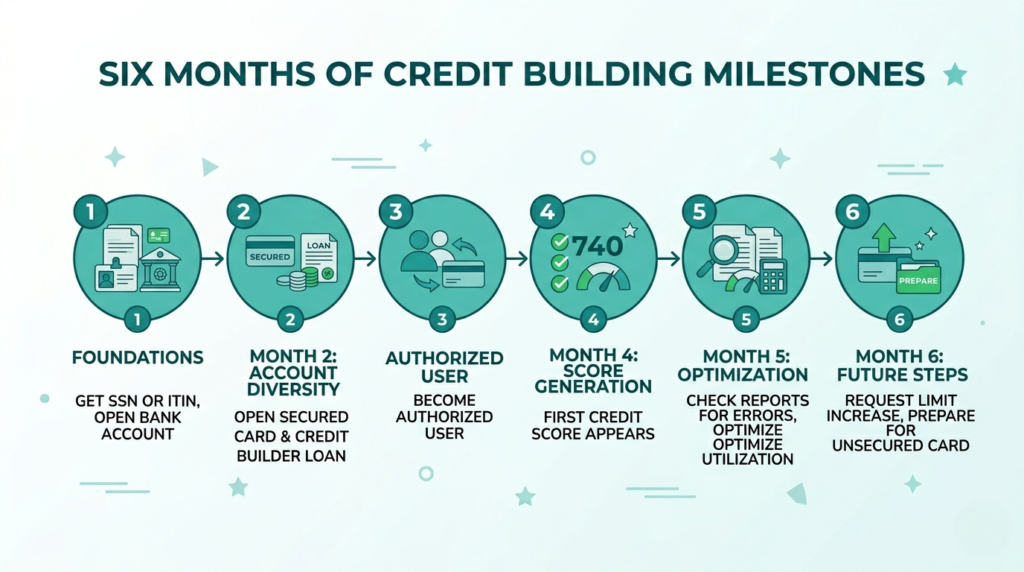
Here is exactly how to build your credit score from zero in six months. This is not theory. This is a practical, step by step roadmap that thousands of immigrants and newcomers have used successfully.
Month 1: Get Your Foundation in Place
Before you can build credit, you need the right tools and documents in place.
Get your SSN or ITIN first. You need either a Social Security Number or an Individual Taxpayer Identification Number to open most credit accounts in the US. If you are authorized to work, apply for your SSN immediately. If you are not eligible for an SSN, apply for an ITIN through the IRS. Many credit building products, including secured credit cards and credit builder loans, accept an ITIN.
Open a US bank account. You need a US bank account to make payments and manage your money before any credit product will work for you. If you do not have one yet, Chime and Majority are excellent options that do not require an SSN. See our article on the best bank accounts for migrants for the full breakdown.
Check if you have any existing US credit history. Some migrants already have a thin credit file from a previous US address, a student loan, or a utility account. Get your free credit reports at AnnualCreditReport.com and check all three bureaus. If you already have a file, you are ahead of where you think you are.
Sign up for a free credit monitoring service. Credit Karma and Experian both offer free credit score monitoring with no impact to your score. This is how you track your progress every month and spot any errors immediately.
Month 1 to 2: Open Your First Credit Building Product
This is the most important step. You cannot build credit without a credit account, and the best starting point for someone with no credit history is either a secured credit card or a credit builder loan, ideally both.
The Best Secured Credit Cards for Building Credit From Zero
A secured credit card is the most widely recommended tool for how to build credit from scratch. Here is how it works: you make a refundable security deposit, usually between $200 and $500, and that deposit becomes your credit limit. You use the card for small purchases, pay it off in full every month, and the card issuer reports your payment history to all three credit bureaus. Over time, this builds your score.
The key difference between a secured card and a prepaid debit card is that a secured card reports to the credit bureaus. A prepaid card does not. Always make sure the secured card you choose reports to all three bureaus: Equifax, Experian, and TransUnion.
Discover it Secured Card: Best Overall for Credit Building
The Discover it Secured card is widely considered the best secured card on the market for immigrants and newcomers. Why? Because it does something almost no other secured card does: it gives you cash back rewards while you build credit, and it automatically reviews your account after seven months to potentially upgrade you to an unsecured card and return your deposit.
Key features:
- 2% cash back at gas stations and restaurants, 1% on everything else
- $200 minimum deposit to open
- No annual fee
- Automatic account reviews starting at 7 months to upgrade to unsecured
- Reports to all three major credit bureaus
- FICO score shown on monthly statements for free
- No foreign transaction fee (great for immigrants who travel)
- Accepts ITIN for applications in many cases
Best for: Anyone who wants to build credit while earning real rewards and has a path to an unsecured card without opening a new account.
Capital One Platinum Secured Card: Best for Low Deposit Requirements
Capital One is one of the most immigrant friendly credit card issuers in the US. The Capital One Platinum Secured card is notable because it may allow you to get a $200 credit limit with a deposit as low as $49 depending on your creditworthiness, which is one of the lowest deposit requirements available on any secured card.
Key features:
- Security deposit as low as $49 for a $200 credit limit (or $200 minimum deposit)
- No annual fee
- Reports to all three major credit bureaus
- Automatic credit line reviews after six months of on time payments
- CreditWise tool included free to monitor your score
- Accepts ITIN in many cases
- Option to upgrade to the Capital One Platinum unsecured card with good behavior
Best for: Immigrants and newcomers who want the lowest possible upfront deposit while still getting full credit bureau reporting and a clear path to an unsecured card.
Capital One Quicksilver Secured Card: Best Secured Card With Rewards
If you want a secured card that earns flat rate cash back on every purchase, the Capital One Quicksilver Secured card offers 1.5% cash back on every purchase with no categories to track. It is a step up from the Platinum Secured card for people who want simplicity and rewards together.
Key features:
- 1.5% cash back on every purchase, no categories needed
- $200 minimum deposit
- No annual fee
- No foreign transaction fee
- Reports to all three major credit bureaus
- Automatic credit line reviews after six months
- Path to upgrade to unsecured Quicksilver card
Best for: Immigrants who want to earn flat rate rewards while building credit without tracking spending categories.
OpenSky Secured Visa Card: Best Secured Card With No Credit Check
The OpenSky Secured Visa card is unique because it does not require a credit check at all to be approved. There is also no bank account required to apply, which makes it one of the most accessible secured cards for immigrants who are still in the process of establishing their US banking and credit foundation.
Key features:
- No credit check required to apply
- No bank account required
- $200 minimum deposit
- $35 annual fee (lower than many alternatives given the accessibility)
- Reports to all three major credit bureaus
- Available to applicants with ITIN
Best for: Immigrants who have been declined elsewhere, do not yet have a US bank account, or simply want guaranteed approval without a credit inquiry affecting their file.
Chime Credit Builder Card: Best Free Credit Building Option
The Chime Credit Builder card deserves special mention because it works differently from every other card on this list. There is no minimum deposit required, no interest charges, no annual fee, and no credit check. You simply move money into a Credit Builder account and that becomes your spending limit. Chime reports your payments to all three credit bureaus exactly like a regular credit card.
Key features:
- No minimum deposit
- No annual fee, no interest charges ever
- No credit check to open
- Reports to all three credit bureaus
- Works like a debit card funded by your own money
- Requires a Chime checking account (which is free and easy to open)
Best for: Immigrants who want to start building credit at absolutely zero cost and with zero risk of debt or interest charges.
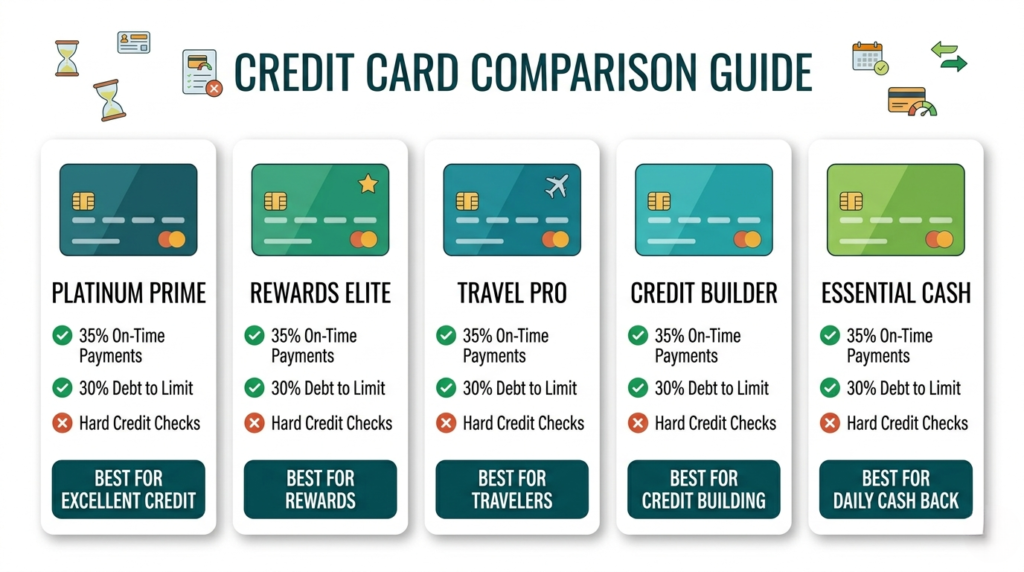
Credit Builder Loans: The Second Tool Every Newcomer Should Use
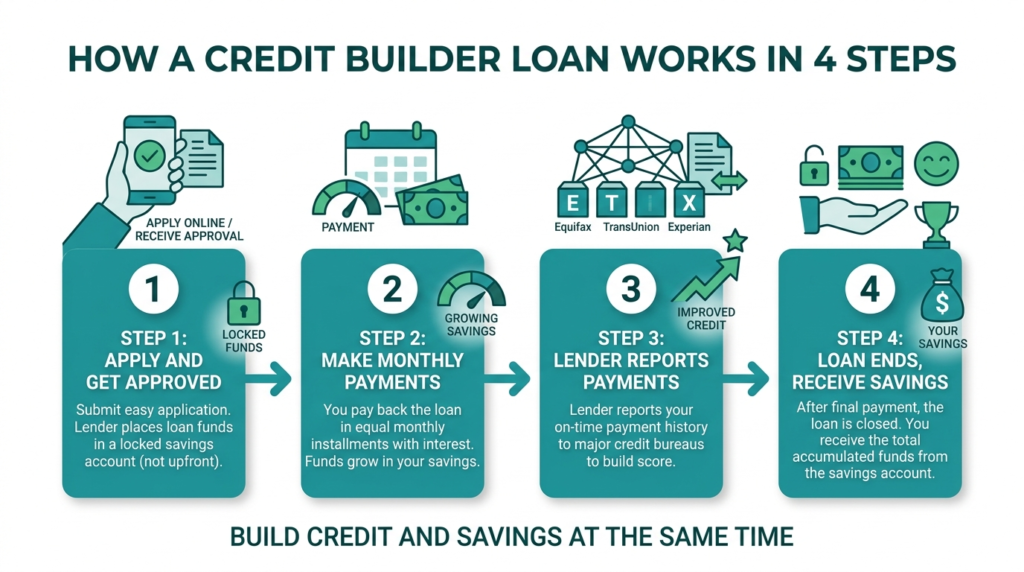
A credit builder loan is the second most powerful tool in your credit building toolkit, and it works in a way that surprises most people. Instead of getting money upfront and paying it back, you make payments into a savings account and receive the money at the end of the loan term.
Here is how it works step by step: You apply for a credit builder loan at a credit union, community bank, or online lender. They hold the loan amount in a locked savings account. You make fixed monthly payments for 6 to 24 months. They report every payment to the credit bureaus. At the end of the term, the money is released to you. You have built credit and saved money at the same time.
Credit builder loans are particularly powerful for building your credit mix, which accounts for 10% of your score. Having both a credit card and a credit builder loan on your report signals to lenders that you can manage different types of credit responsibly.
Month 2 to 4: Become an Authorized User
One of the fastest ways to build credit quickly is to become an authorized user on someone else’s credit card account. If you have a friend, family member, or partner with a long standing credit card in good standing, ask them to add you as an authorized user.
Here is the powerful part: their entire payment history and account age on that card gets added to your credit file immediately. You do not even need to use the card. The account age and clean payment history simply appear on your report, which can add significant points to your score within 30 to 60 days.
What to look for in an authorized user arrangement:
- The primary cardholder should have zero or low credit utilization on that card
- The account should have at least two to three years of clean payment history
- The card issuer should report authorized users to all three bureaus (most major issuers do)
- You should trust the person completely, as their behavior affects your score too
If you do not have someone in your network who can add you as an authorized user, services like Tradeline Supply connect people who want to be added as authorized users to cardholders willing to add them for a fee. This is a legitimate practice, though it works best as a complement to your own accounts rather than a standalone strategy.
Month 3 to 5: Use Your Credit Strategically
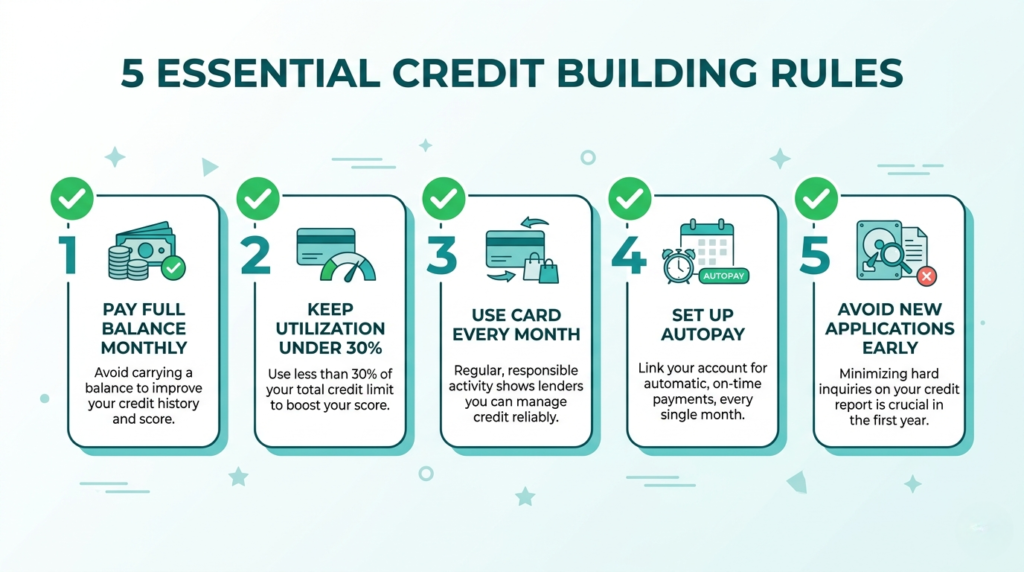
Opening your accounts is step one. Using them correctly every single month is what actually builds your score. Here are the rules that matter most:
Rule 1: Pay your full balance every single month. This is the most important rule. Pay the entire statement balance, not just the minimum payment, by the due date every month. Carrying a balance does not help your score and costs you interest. Pay in full, every time.
Rule 2: Keep your credit utilization under 30%. If your secured card has a $500 limit, never let your balance exceed $150 when your statement closes. Better yet, keep it under $50. Low utilization signals to lenders that you are not credit dependent.
Rule 3: Use your card every month, but just for small purchases. A card that never gets used can eventually be closed by the issuer, which hurts your score. Use your card for something small each month, such as a streaming subscription or a tank of gas, and pay it off in full.
Rule 4: Set up autopay immediately. One missed payment can undo months of progress. Set up autopay for at least the minimum payment as a safety net, then manually pay the full balance before the due date each month.
Rule 5: Do not apply for new credit in the first six months. Every new application creates a hard inquiry, which temporarily lowers your score. Stay focused on your existing accounts for the first six months and resist the temptation to apply for new products.
Month 4 to 6: Monitor, Optimize, and Plan Your Next Move
By month four, if you have been consistent with your secured card payments and credit builder loan, you should have your first real credit score appearing on the bureaus. Here is what to do with it.
Check your credit reports for errors. Errors on credit reports are more common than most people realize and they can significantly drag your score down. Get your free reports at AnnualCreditReport.com and look for accounts you do not recognize, payments incorrectly marked as late, or personal information that does not match yours. Dispute any errors directly with the relevant bureau online.
Track your score monthly. Use Credit Karma, Experian free tier, or your card issuer’s built in score tracker to watch your progress. You should see your first score appear around month two or three, and steady growth from there if your payments are clean.
Request a credit limit increase at month six. Many secured card issuers will increase your credit limit after six months of on time payments. A higher limit with the same spending lowers your utilization ratio automatically, which can give your score a meaningful boost without any extra effort.
Prepare for your first unsecured card. By the end of month six, if everything has gone according to plan, your score should be approaching or above 620 to 670. This opens the door to your first unsecured credit card, which is a major milestone. Cards like the Capital One Platinum unsecured card and the Petal 1 Visa are designed specifically for people with limited credit history and are excellent next steps.
Common Credit Building Mistakes To Avoid
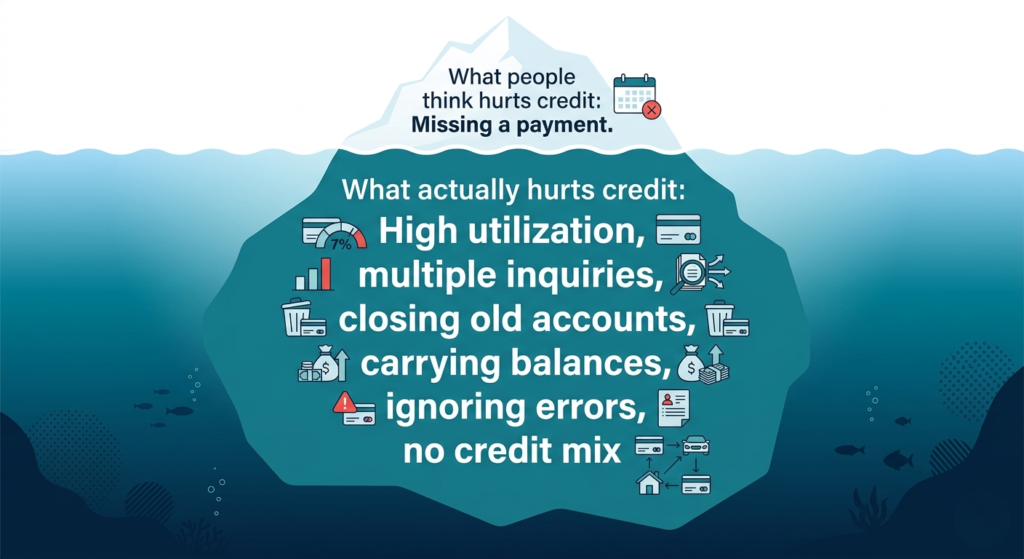
Knowing how to build credit from zero is important. Knowing what not to do is equally valuable. These are the mistakes that slow people down the most.
Mistake 1: Applying for too many cards at once. Every application is a hard inquiry. Multiple hard inquiries in a short period signal financial stress to lenders and lower your score temporarily. Start with one secured card and one credit builder loan. That is enough.
Mistake 2: Carrying a balance to build credit. This is one of the most persistent myths in personal finance. Carrying a balance does not help your score. It only costs you interest. Pay in full every month.
Mistake 3: Maxing out your secured card. Using 90% or 100% of your credit limit, even if you pay it off monthly, crushes your credit utilization score. Keep your balance low when your statement closes.
Mistake 4: Closing your first accounts too early. Length of credit history matters. Your first secured card, even after you upgrade to an unsecured card, is worth keeping open as long as there is no annual fee. The age of that account continues to work in your favor for years.
Mistake 5: Ignoring your credit report. Errors happen. Fraud happens. A fraudulent account opened in your name can destroy months of hard work. Check your reports at AnnualCreditReport.com at least every four months.
Mistake 6: Missing even one payment. Payment history is 35% of your score. One missed payment can drop your score by 60 to 110 points and stays on your report for seven years. Set up autopay. Put the due dates in your calendar. Do not miss a single one.
What To Do if You Have Foreign Credit History
If you built a solid credit history in your home country before moving to the US, you may not have to start completely from scratch. Here are the tools that can help you use your existing financial track record.
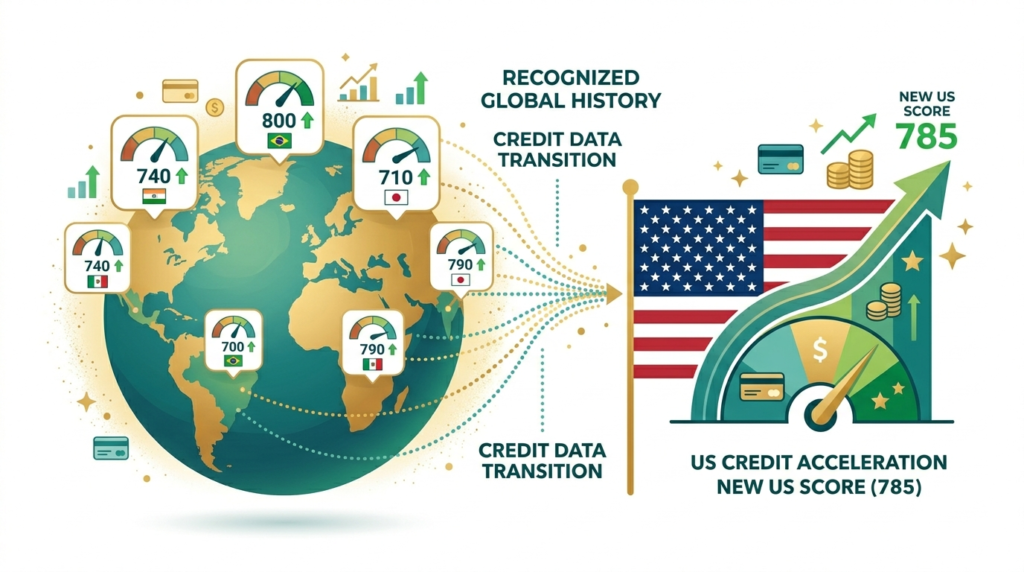
Nova Credit is a service that translates your foreign credit history from countries including India, Mexico, Canada, Australia, the UK, Brazil, the Dominican Republic, Nigeria, Kenya, the Philippines, and South Korea into a US equivalent report that American lenders can read. Several major companies including American Express, MPOWER Financing, and Rocket Homes already accept Nova Credit reports.
Stilt is a lender that evaluates immigrants for personal loans and credit products using factors beyond US credit history, including education, employment, and visa type. If you need access to a credit account quickly and traditional US products are not available to you yet, Stilt is one of the most immigrant forward options available.
Your Credit Building Toolkit: Everything in One Place
Here is a complete summary of every product and tool mentioned in this guide, organized by category:
Free Credit Monitoring:
- Credit Karma (free, no impact to score)
- Experian free tier (free credit report and score)
Secured Credit Cards:
- Discover it Secured Card (best overall, cash back rewards)
- Capital One Platinum Secured Card (lowest deposit possible)
- Capital One Quicksilver Secured Card (flat rate cash back)
- OpenSky Secured Visa (no credit check, no bank account needed)
- Chime Credit Builder Card (zero deposit, zero fees, zero interest)
Credit Builder Loans:
- Self Credit Builder Account ($25 per month and up)
- Kikoff Credit Account ($5 per month)
Unsecured Cards for After Month Six:
- Capital One Platinum (first unsecured card)
- Petal 1 Visa (uses cash flow data, great for immigrants)
For Immigrants With Foreign Credit History:
- Nova Credit (translates foreign credit to US equivalent)
- Stilt (loans for visa holders without US credit history)

The Bottom Line
Building credit from zero in the US is not a mystery. It is a process. And it is one that works reliably for anyone who follows it consistently, whether you arrived last month or have been here for years without ever opening a credit account.
Start with your SSN or ITIN and a free bank account. Open a secured credit card, the Discover it Secured card or the Chime Credit Builder are the best starting points. Add a credit builder loan from Self or Kikoff to build your credit mix. Pay every single balance in full, every single month. Keep your utilization low. And monitor your score monthly so you can watch your progress and catch any errors early.
Six months from today, you could have a real, measurable US credit score in the Good range. That score will lower your insurance rates, improve your rental applications, qualify you for better loan terms, and open doors that were closed to you before.
Your credit history does not define who you are. But in the US, it does shape what is available to you. Now you know exactly how to build it.
Where are you in your credit building journey? Drop a comment below. Your story might be exactly what someone else needs to hear today.
Disclaimer: This article contains affiliate and referral links. If you apply or sign up through these links, I may earn a commission at no extra cost to you. All recommendations are based on genuine evaluation of products that benefit immigrants and people building credit from zero. This is not financial advice. Please review all product terms before applying.