
What is a Credit Score and Why It Controls Your Life in America
There is a number attached to your name in America. You cannot see it on your forehead. Nobody announces it when you walk into a room. But it is there, quietly working in the background of almost every major financial decision in your life.
That number is your credit score.
If you grew up outside the United States, the concept of a credit score may feel strange or even unsettling. In most countries, your reputation, your family, your employer, or your savings account speaks for you when you need to borrow money or rent a home. In America, a three digit number does that job instead.
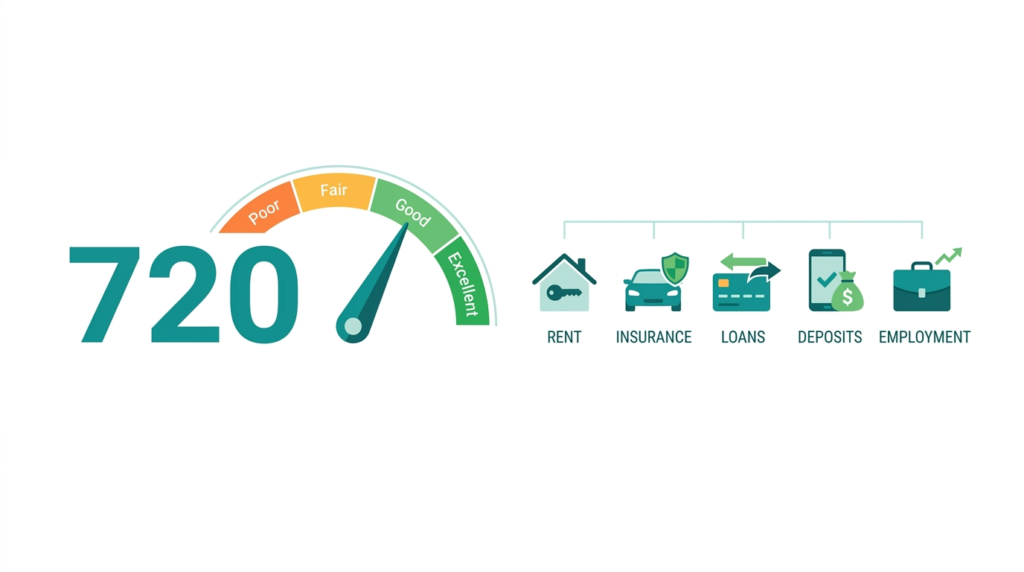
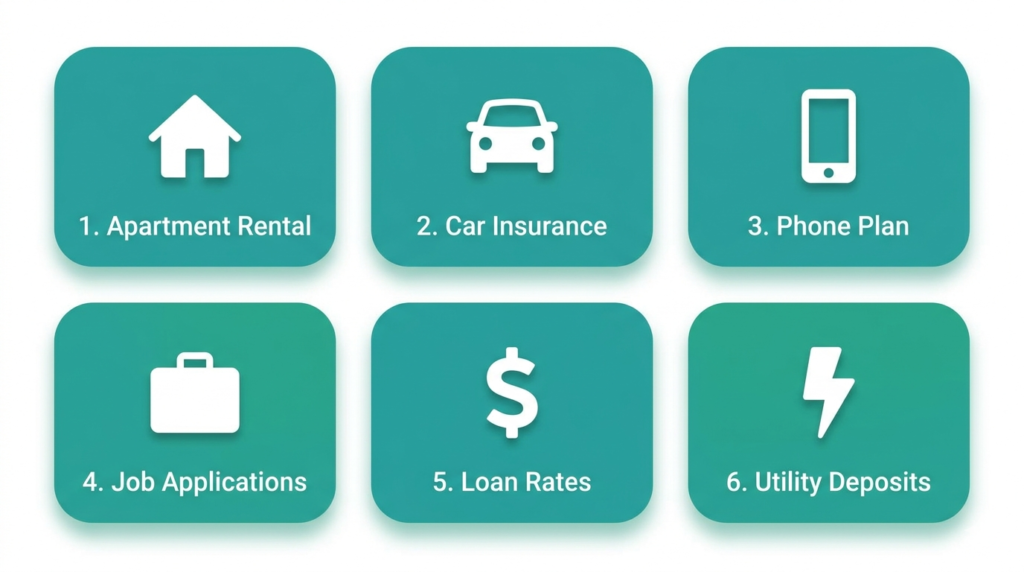
And the reach of that number goes far beyond what most newcomers expect. It is not just about loans. Your credit score in the US affects your ability to rent an apartment, the monthly rate you pay for car insurance, whether you can get a phone plan without a large deposit, and in some states even whether an employer will hire you.
Understanding what a credit score is and why it matters in America is not optional for immigrants and newcomers. It is essential. This article will explain everything from scratch, in plain language, with no assumptions about what you already know.

What is a Credit Score in Simple Terms
A credit score is a three digit number between 300 and 850 that represents how reliably you have managed borrowed money in the past. The higher the number, the more trustworthy you appear to lenders, landlords, insurers, and anyone else who needs to evaluate your financial behavior before doing business with you.
Think of it like a financial report card. Except instead of grades for math and science, you are being graded on whether you pay your bills on time, how much of your available credit you use, how long you have had credit accounts open, and how often you apply for new credit.
This report card follows you everywhere in America. It is checked when you apply for a credit card, a car loan, a mortgage, an apartment, and in many cases even a job. Understanding what a credit score is and how it works is one of the first things every immigrant needs to learn about the US financial system.
Where Does a Credit Score Come From
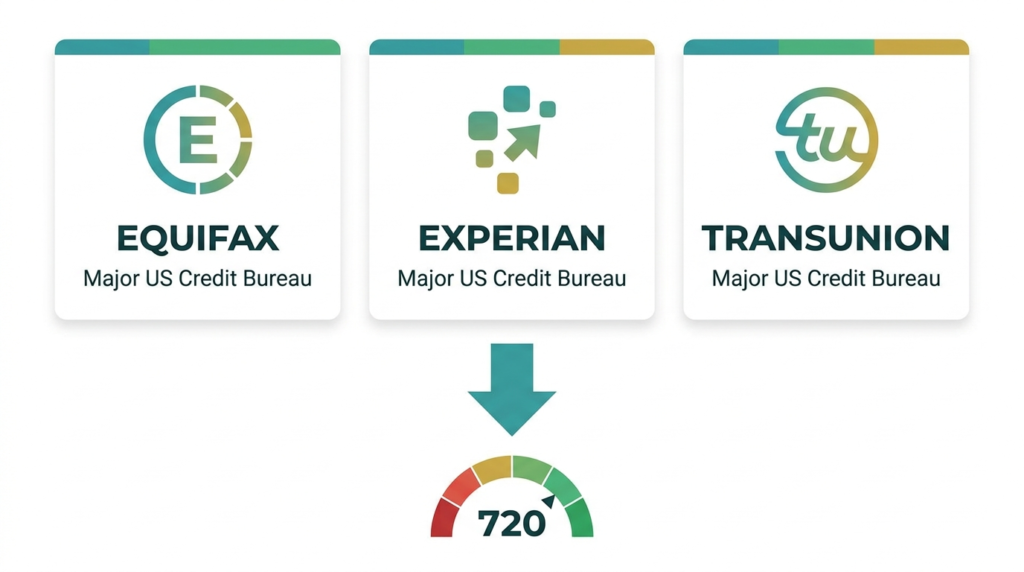
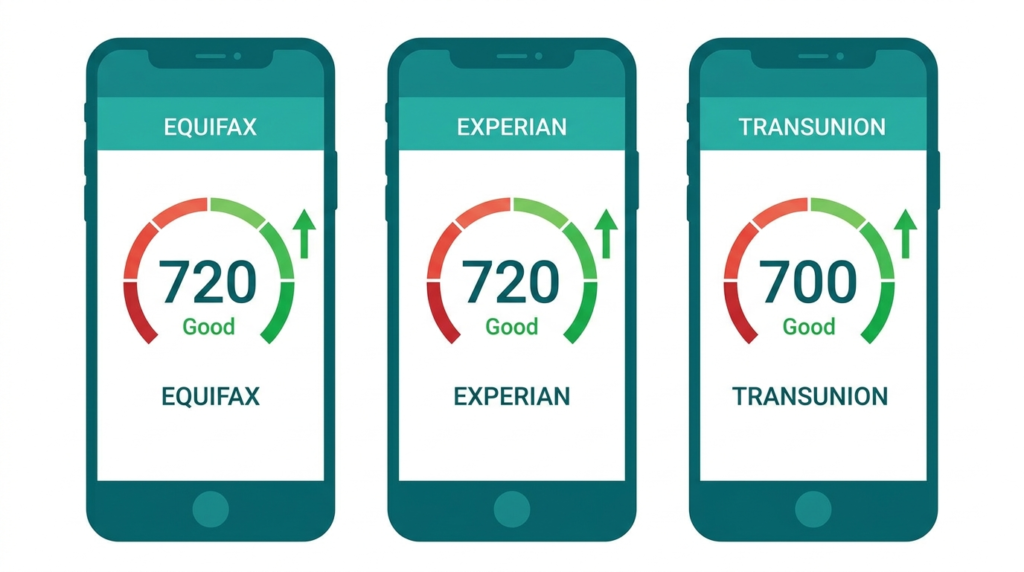
Your credit score is calculated by companies called credit bureaus. In the United States there are three major ones: Equifax, Experian, and TransUnion. Each bureau collects information about your borrowing and repayment behavior from lenders, credit card companies, and other financial institutions. They then use that data to calculate your score.
The most widely used scoring model in the US is called the FICO score, created by a company called Fair Isaac Corporation. There is also a model called VantageScore, which is used by many free credit monitoring services including Credit Karma. Both models use the 300 to 850 scale and weigh similar factors, though they calculate them slightly differently.
Here is the important thing to know: you do not have one single credit score. You have many. Each bureau may have slightly different information about you, and each scoring model weighs that information differently. That is why the number you see on Credit Karma may differ from the one your bank shows you. They are all measuring the same underlying financial behavior, just through slightly different lenses.
The Credit Score Scale: What Every Range Actually Means
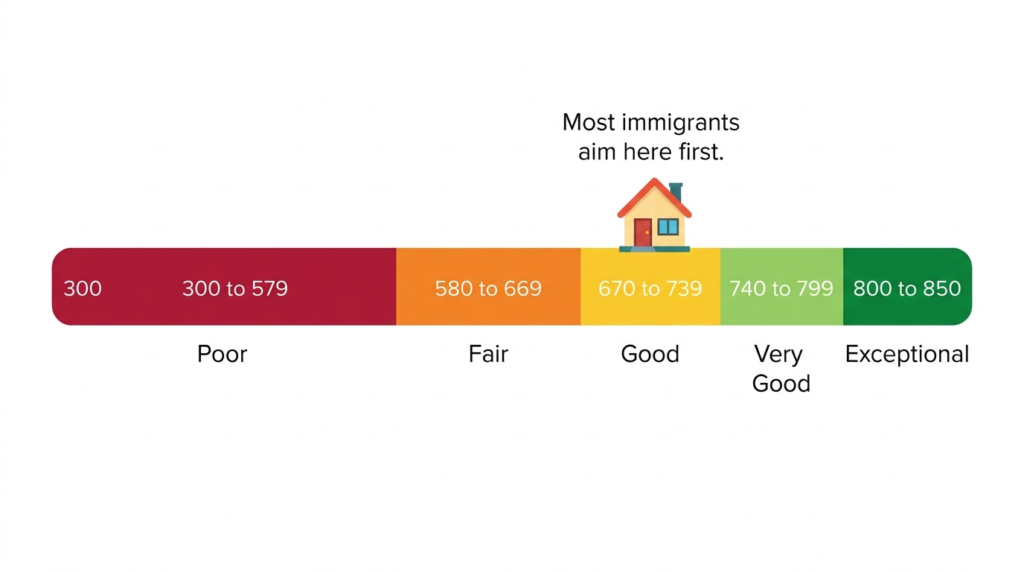
Here is how the credit score scale breaks down in the US and what each range means for your real life:
| Score Range | Rating | Real World Impact |
|---|---|---|
| 800 to 850 | Exceptional | Best interest rates, easiest approvals, highest credit limits |
| 740 to 799 | Very Good | Near best rates, most lenders approve without question |
| 670 to 739 | Good | Approved by most lenders, decent rates |
| 580 to 669 | Fair | Some approvals, higher interest rates, limited options |
| 300 to 579 | Poor | Most applications denied, very high rates if approved |
| No score | Credit Invisible | Treated as if you do not exist financially |
That last category, credit invisible, is where most immigrants begin. It does not mean you have bad credit. It means you have no US credit history at all, and to the American financial system that can feel just as limiting as having a poor score.
The good news: moving from credit invisible to a Good score is entirely achievable within six to twelve months with the right tools and habits. We cover exactly how to do that in our companion article, How To Build Credit From Zero in 6 Months.
The Five Factors That Make Up Your Credit Score
This is the part that most people skip over, and it is the most important section in this entire article. Once you understand exactly how your credit score is calculated, every financial decision you make becomes more intentional.
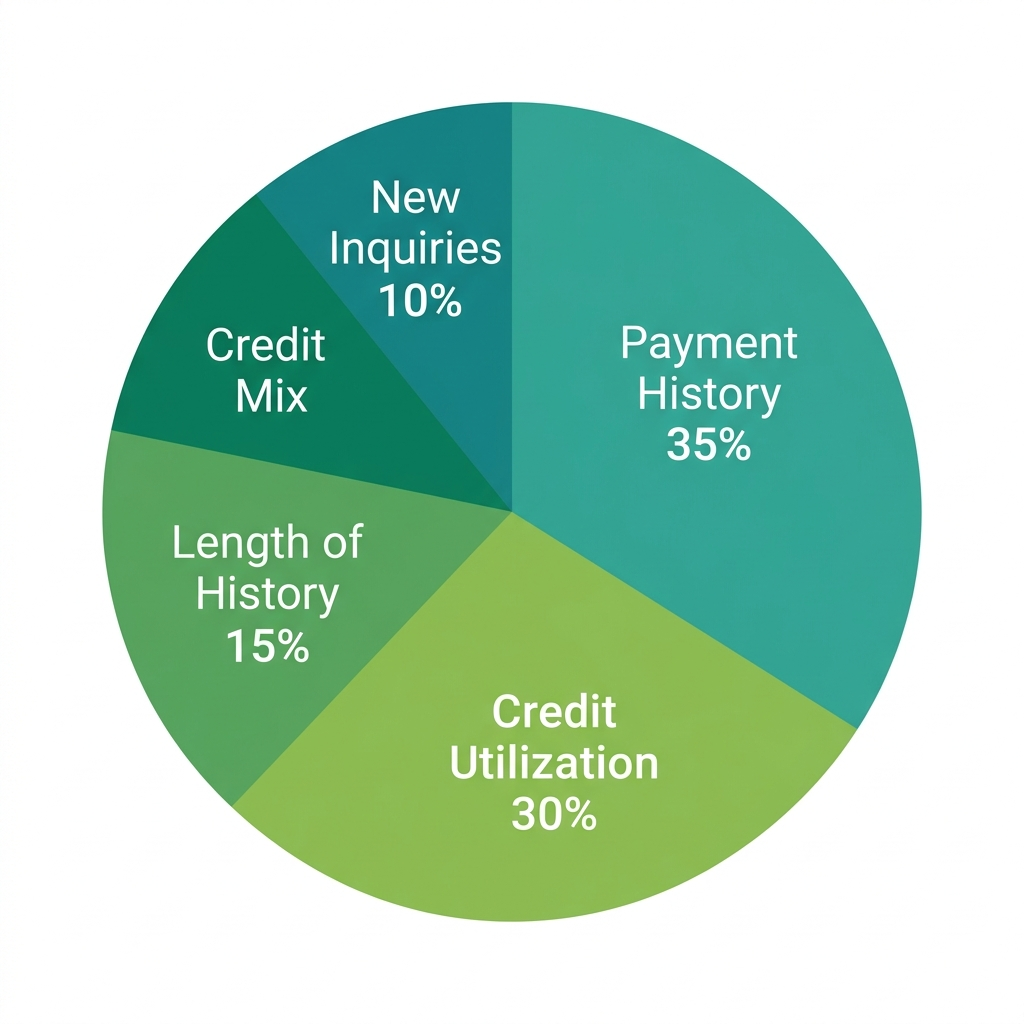
Your FICO score is built from five factors, each weighted differently:
Factor 1: Payment History – 35% of Your Score
Payment history is the single largest factor in your credit score and it is exactly what it sounds like: do you pay your bills on time?
Every payment you make on a credit card, loan, or line of credit is reported to the credit bureaus. Pay on time and it strengthens your score. Pay late by 30 days or more and it can drop your score by 60 to 110 points in a single month. That late payment then stays on your credit report for seven years.
This is why setting up autopay from day one is one of the most important credit habits you can build. One missed payment is not just a fee. It is a scar on your credit history that lingers for years.
Factor 2: Credit Utilization – 30% of Your Score
Credit utilization is the percentage of your total available credit that you are currently using. It is the second biggest factor in your score and one that many people do not fully understand.
Here is a simple example. If your credit card has a $1,000 limit and your current balance is $700, your credit utilization is 70%. That is very high and will significantly lower your score. The general recommendation is to keep your utilization below 30% of your total credit limit. Below 10% is even better.
What surprises most newcomers is that this is not just about whether you pay your bill. You can pay your bill in full every month and still have high utilization if your balance is high when your statement closes. The bureaus take a snapshot of your balance on your statement closing date, not your payment date. So if you want to optimize your utilization, pay down your balance a few days before your statement closes each month.
Factor 3: Length of Credit History — 15% of Your Score
The longer your credit accounts have been open and in good standing, the better this factor looks. The bureaus look at the age of your oldest account, your newest account, and the average age of all your accounts combined.
This is why financial experts consistently recommend opening your first credit account as early as possible and keeping it open even after you no longer use it regularly. Every month that account stays open, its age increases and works in your favor. Closing your first credit card, even if you have upgraded to a better one, can lower your average account age and temporarily hurt your score.
Factor 4: Credit Mix – 10% of Your Score
Credit mix refers to the variety of different credit account types on your report. Lenders like to see that you can manage more than one type of credit responsibly. The main categories are revolving credit, which includes credit cards and lines of credit, and installment credit, which includes loans with fixed monthly payments like a car loan, student loan, or credit builder loan.
You do not need to open every type of account. But having at least one credit card and one installment loan on your report, both in good standing, signals to lenders that you are a well rounded borrower.
Factor 5: New Credit Inquiries – 10% of Your Score
Every time you apply for a new credit product, the lender performs what is called a hard inquiry on your credit report. This temporarily lowers your score by a few points, typically 5 to 10 points per inquiry. The effect fades over time and disappears from your report after two years.
The reason this matters is that applying for several credit products in a short period can signal financial stress to lenders, as if you are desperately searching for credit. During your first year of building credit, limit yourself to one or two applications total. Once your score is established, the impact of each inquiry is much smaller.
How a Credit Score Controls Your Life in America: The Six Areas That Surprise Immigrants Most
This is the section that genuinely shocks most newcomers. Most people know a credit score affects loans. Very few people arrive in the US knowing just how far its reach extends into everyday life.
1. Renting an Apartment
This is often the first place immigrants encounter the credit score system and feel its impact. Most landlords in the US run a credit check as part of the rental application process. If you have no credit history or a low score, many landlords will simply reject your application, regardless of your income or employment status.
Those who do approve you with no credit history will often require a significantly larger security deposit, sometimes two to three months of rent upfront, or demand a cosigner who has an established US credit history.
Understanding how credit scores affect renting in America is one of the most urgent reasons for immigrants to begin building their score as soon as possible after arriving.
2. Car Insurance Rates
This one surprises nearly everyone. In most US states, insurance companies are legally allowed to use your credit score as a factor in determining your car insurance premium. Drivers with poor or no credit history pay significantly more for the same coverage than drivers with excellent credit.
Studies have shown that drivers with poor credit scores can pay 50% to 80% more annually for car insurance than drivers with good scores. For immigrants just arriving, this means your first year of car insurance premiums will likely be higher than what your American coworkers pay for the same policy, simply because you have no credit file yet.
3. Getting a Phone Plan
Try to sign up for a postpaid phone plan with a major carrier like AT&T, Verizon, or T-Mobile without a credit history and you will quickly discover that the carrier either requires a large security deposit or steers you toward a prepaid plan with fewer benefits.
This is one of the less talked about ways that not having a credit score in America affects daily life. A good credit score gives you access to the best phone plan rates with no deposit required.
4. Job Applications
This one is perhaps the most surprising of all. In many US states, employers are permitted to run a credit check as part of the hiring process, particularly for roles that involve financial responsibility, access to sensitive data, or positions of trust.
A thin credit file or a poor credit score can cost you a job offer. While employers cannot see your actual credit score, they can see your credit report, which shows your payment history, outstanding debts, and any public records like bankruptcies or judgments.
5. Loan Interest Rates
The interest rate you are offered on any loan, whether a personal loan, a car loan, or eventually a mortgage, is directly tied to your credit score. The difference between a good credit score and a poor one can translate into thousands of dollars over the life of a loan.
Here is a concrete example. On a $25,000 car loan over five years, a borrower with an exceptional credit score might receive a 4% interest rate, paying roughly $2,600 in interest over the loan term. A borrower with a fair score might receive a 12% rate, paying nearly $8,200 in interest for the exact same loan. That difference of over $5,000 goes entirely to the lender, not to you.
6. Utility Deposits and Banking Access
When setting up utilities like electricity, gas, or internet service, providers frequently check your credit. With no credit history, many will require a security deposit of $100 to $300 per account. These deposits are refundable but they tie up cash you may need elsewhere when you are just getting started.
Some banks also use credit data to determine whether to approve you for certain account types, premium credit cards, or loans down the line. The better your credit score, the more of the financial system opens up to you over time.
How To Check Your Credit Score For Free
One of the most important things to know about your credit score in the US is that you are legally entitled to check it for free. You do not need to pay anyone to see your credit report or monitor your score.
Here are the best free options:
Credit Karma: Best Free Credit Score Monitoring Overall
Credit Karma is the most widely used free credit monitoring service in the US. It shows you your credit scores from TransUnion and Equifax, updated weekly, with a full breakdown of the factors affecting your score. It also shows you your complete credit reports, alerts you to any changes on your report, and provides personalized recommendations for credit products.
Credit Karma uses the VantageScore model, which may differ slightly from the FICO score a lender sees, but it is an excellent free tool for tracking your progress and understanding your credit profile.
There is no credit card required to sign up and checking your score on Credit Karma never affects your credit because it uses a soft inquiry, not a hard one.
Experian: Best for FICO Score Access and Credit Report Monitoring
Experian is one of the three major credit bureaus and it offers a free account that gives you access to your FICO score directly, not a VantageScore estimate, along with your full Experian credit report. This is the closest you can get to seeing what lenders actually see without paying for a service.
Experian also offers a feature called Experian Boost, which allows you to add positive payment history from bills that do not normally appear on your credit report, such as utility payments, phone bills, and even certain streaming subscriptions. This can give your score an immediate boost, which is particularly valuable for immigrants just starting to build their US credit file.
AnnualCreditReport.com: Free Official Credit Reports From All Three Bureaus
This is the only government authorized website where you can get your full credit reports from all three bureaus, Equifax, Experian, and TransUnion, completely free. You are legally entitled to one free report from each bureau per year, though during recent years access has been expanded to weekly free reports.
This is different from checking your score. Your credit report shows the full detail behind the score: every account, every payment history entry, every inquiry, and any public records. Reviewing your report from all three bureaus at least twice a year is one of the most important credit habits you can build.
Look specifically for: accounts you do not recognize, payments marked as late that you paid on time, personal information that does not match yours, and any collections accounts you were not aware of. All of these can be disputed and corrected if they are inaccurate.
The Biggest Credit Score Myths That Hurt Immigrants
Misinformation about credit scores is everywhere, and it causes real financial harm. Here are the most common myths, corrected.
Myth 1: Checking your own credit score hurts it. False. Checking your own score is called a soft inquiry and has zero impact on your score. Only hard inquiries from lenders when you apply for credit can temporarily lower it. Check your score as often as you like.
Myth 2: You need to carry a balance to build credit. This is one of the most persistent and harmful myths in personal finance. Carrying a balance means paying interest, which costs you money. It does not help your score. What builds your score is using your card and paying the full balance on time every month.
Myth 3: Your income affects your credit score. Your credit score does not consider your income, your job title, your savings account balance, or your net worth. A high income person with a history of missed payments has a lower score than a modest income person with a perfect payment record.
Myth 4: Closing a credit card improves your score. Closing a credit card almost always lowers your score, for two reasons: it reduces your total available credit which raises your utilization, and it can lower your average account age. Only close a card if it has an annual fee you cannot justify.
Myth 5: Paying off a collection account removes it from your report. Unfortunately, paying a collection account does not immediately remove it from your report. The account will still appear but will be marked as paid. It stays on your report for seven years from the original delinquency date. That said, paying it is still the right thing to do, as some newer scoring models give less weight to paid collections.
Myth 6: Immigrants cannot build credit in the US. Completely false. Immigrants build US credit every day using secured credit cards, credit builder loans, and ITIN based accounts. The process takes time but there are no legal barriers to immigrants building an excellent credit score in the United States.
What Immigrants Should Do in Their First 30 Days
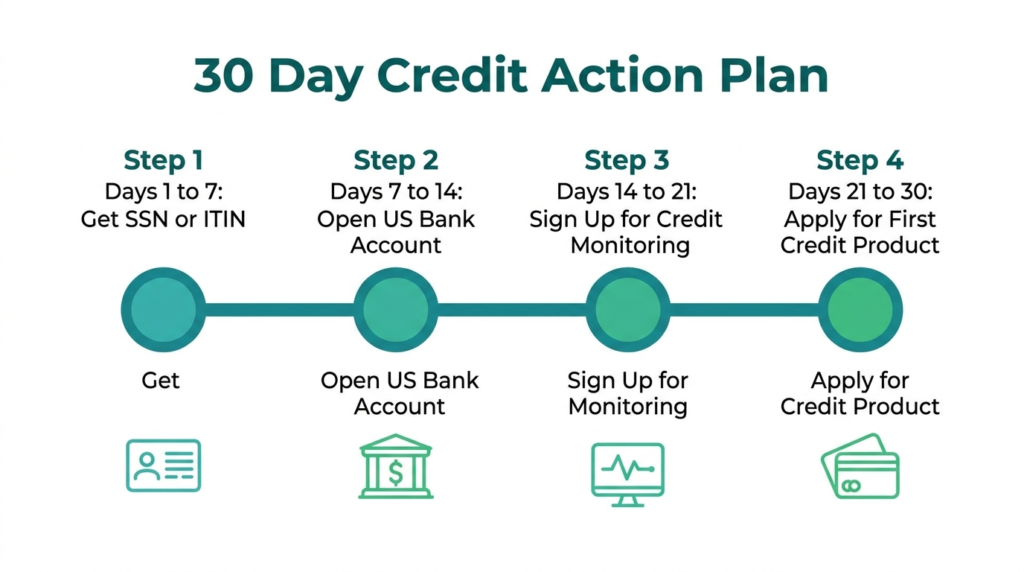
Now that you understand what a credit score is and why it matters, here is your action plan for the first month after arriving in the US.
Day 1 to 7: Get your documents in order. If you are eligible, apply for your Social Security Number immediately. If you are not eligible for an SSN, apply for an ITIN through the IRS. You will need one of these to open most credit building products in the US.
Day 7 to 14: Open a US bank account. You need a US bank account before you can open a credit card or apply for a credit builder loan. Chime, Majority, and Current all accept foreign passports and do not require an SSN. See our article on the best bank accounts for migrants for more detail.
Day 14 to 21: Sign up for free credit monitoring. Create a free account on Credit Karma and Experian. Even with no credit history, you will be able to see if any file exists in your name and monitor it going forward. This is also where you will catch any fraud or errors early.
Day 21 to 30: Apply for your first credit building product. Open a secured credit card or a credit builder loan, or both. The Discover it Secured card, the Capital One Platinum Secured card, and the Chime Credit Builder card are the best starting points depending on your situation. We review each one in detail in our article on How To Build Credit From Zero in 6 Months
Your Credit Score Is Not Your Worth, But It Does Shape Your Opportunities
There is something that feels uncomfortable about a system that reduces a person’s financial trustworthiness to a three digit number. Especially for immigrants who have managed money responsibly for years in another country, only to arrive in the US and be treated as if their financial history never existed.
That frustration is valid.
But here is the most empowering thing we can tell you: the US credit system, for all its flaws, is learnable and buildable. It does not care where you came from. It does not care what language you speak or what passport you carry. It responds to one thing only: consistent, responsible behavior with credit accounts over time.
Every on time payment you make adds to your record. Every month your account stays open increases your history. Every percentage point of utilization you keep low strengthens your profile. The system is mechanical, and that means you can work it deliberately.
Six months from today you could have a real score. Twelve months from today it could be in the Good range. Two years from today, with consistent habits, it could be in the Very Good range and opening doors that were closed to you when you arrived.
Have questions about your specific situation? Drop them in the comments below. I read every one and answer as many as I can.

Disclaimer: This article contains affiliate links. If you sign up through these links, I may earn a commission at no extra cost to you. All recommendations are based on genuine evaluation of products that benefit immigrants and newcomers building credit in the US. This is not financial advice.