
Cost of Living in the US, What Nobody Tells You Before You Arrive
Nobody sits you down before you leave and tells you the full truth about the cost of living in the US.
They talk about opportunity. They talk about the American dream. They mention rent is expensive, but nobody tells you that “expensive” in America means something completely different than what you imagined. Nobody explains that health insurance isn’t optional. That your car will cost you more than just a monthly payment. That grocery prices change dramatically depending on what zip code you live in. That tipping isn’t a suggestion, it’s a social contract.
If you’re an immigrant planning your move, already here and feeling blindsided, or somewhere in between, this article is the one you needed before you boarded that plane.
We’re going to break down the real monthly cost of living in America for immigrants, category by category, with honest numbers, money saving tools, and the hidden costs that most guides completely skip.

The Real Average Cost of Living in America for Immigrants
Let’s start with the numbers most guides give you, and then the reality underneath them.
The average American spends roughly $3,500 to $5,500 per month on basic living expenses depending on location. But for immigrants just arriving, the real monthly cost of living in America is often higher in the first few months, before you know the system, before you have credit, before you’ve found the cheaper grocery store two blocks over.
Here’s what the major categories actually look like:
| Expense | Low Cost City | Mid Tier City | High Cost City |
|---|---|---|---|
| Rent (1BR) | $800 to $1,100 | $1,200 to $1,800 | $2,000 to $3,500+ |
| Health insurance | $200 to $450 | $300 to $550 | $400 to $700+ |
| Groceries | $250 to $350 | $300 to $450 | $400 to $600 |
| Transportation | $100 to $300 | $200 to $500 | $150 to $600 |
| Utilities | $80 to $150 | $100 to $200 | $150 to $300 |
| Phone | $30 to $60 | $40 to $80 | $50 to $100 |
| Total estimate | $1,460 to $2,410 | $2,140 to $3,580 | $3,150 to $5,800 |
These are baseline numbers. Add childcare, student loans, or sending money home and the real picture shifts significantly. Let’s go through each category so you know exactly what you’re dealing with.
Rent: The Biggest Shock for Most Immigrants
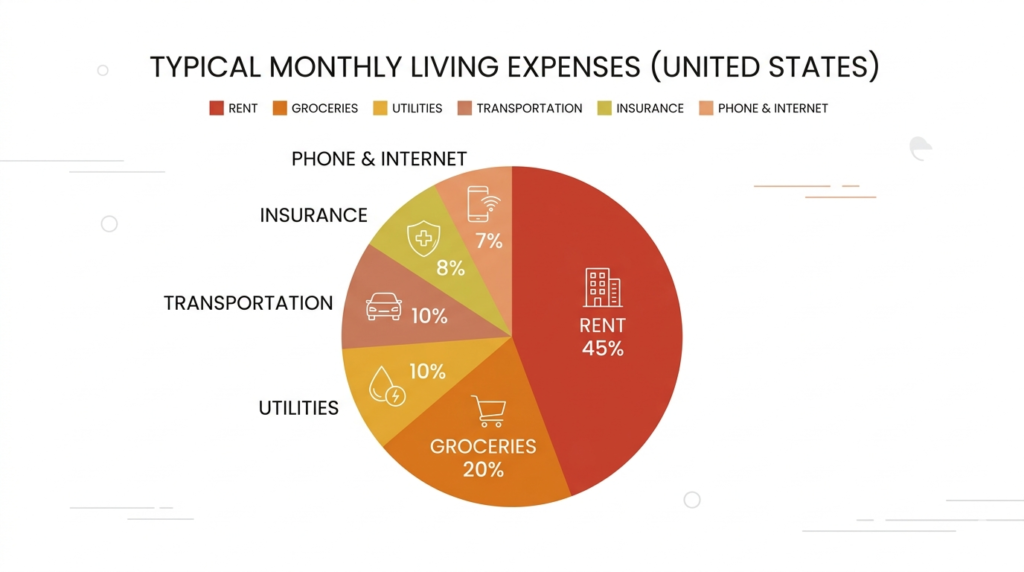
Housing is almost always the largest single expense in any American budget, and understanding housing costs in the US for immigrants is critical before you choose where to settle.
The most important thing nobody tells you: where you live in the US matters more than almost any other financial decision you’ll make. The difference in rent between a city like Austin, Texas and San Francisco, California can be $1,500 to $2,000 per month for the same size apartment.
What to expect:
- Low cost cities (San Antonio, Memphis, Cleveland, Tulsa): $800 to $1,200/month for a one bedroom
- Mid tier cities (Atlanta, Denver, Nashville, Phoenix): $1,300 to $1,900/month
- High cost cities (NYC, San Francisco, Los Angeles, Boston): $2,200 to $3,800+/month
Hidden costs most immigrants don’t anticipate:
- Security deposit, usually one to two months’ rent, due upfront before you move in
- First and last month’s rent, many landlords require both at signing
- Application fees, $30 to $100 per application, nonrefundable
- No credit history = harder approvals, landlords often require a cosigner or larger deposit if you’re new to the US credit system
- Renter’s insurance, usually $10 to $20/month, sometimes required by landlords, always worth having
Money saving tip: If you can spend your first few months in a shared house or with family, do it. Use that time to build your credit score, understand the local rental market, and save for a proper deposit.

Health Insurance in the US: The Cost That Catches Everyone Off Guard
If there is one thing about the American cost of living that genuinely shocks almost every immigrant, it is the cost of healthcare. Understanding health insurance costs in the US for immigrants is not optional, skipping coverage is one of the most financially dangerous mistakes a newcomer can make.
In most countries, healthcare is either free or heavily subsidized. In the United States, it is a private market, and without insurance, a single emergency room visit can cost $3,000 to $30,000.
How health insurance works here:
- If your employer offers insurance, take it even if it feels expensive. Employer plans are almost always cheaper than buying your own.
- If you don’t have employer insurance, you can buy a plan through Healthcare.gov (the ACA marketplace). Depending on your income, you may qualify for subsidies that significantly reduce your premium.
- If your income is very low, you may qualify for Medicaid, a government program that provides free or very low cost coverage.
Typical monthly costs:
- Employer sponsored plan: $150 to $400/month (your share after employer contribution)
- ACA marketplace plan: $200 to $600/month (before subsidies)
- With ACA subsidies: Can be as low as $0 to $50/month depending on income
Key terms to know:
- Premium, your monthly payment to have insurance
- Deductible, what you pay out of pocket before insurance kicks in (often $1,000 to $5,000)
- Copay, a fixed amount you pay per doctor visit
- Out of pocket maximum, the most you’ll ever pay in a year before insurance covers 100%

Car Insurance: Another Expense That Surprises Immigrants
In most of the US, a car isn’t a luxury. It is a necessity. And owning a car in America means paying for auto insurance every single month, by law.
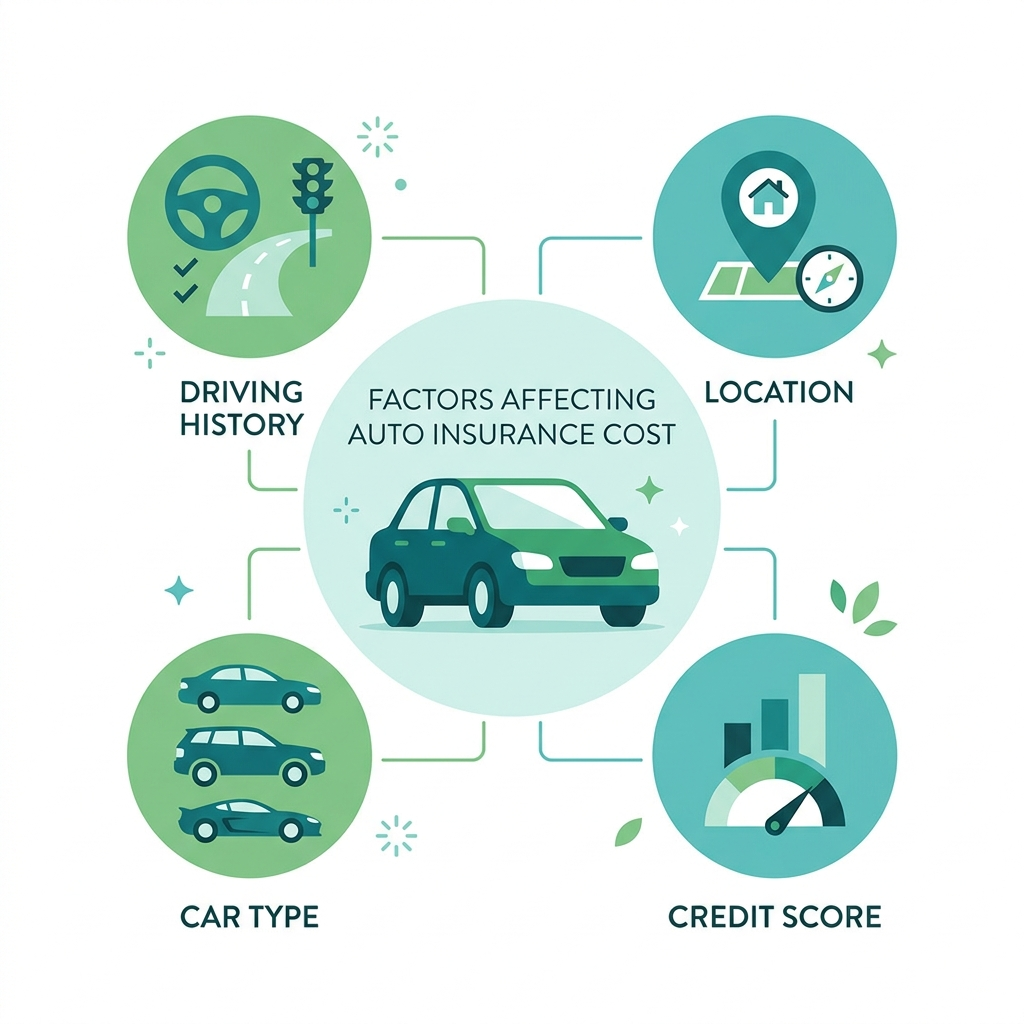
Car insurance costs in the US for immigrants tend to be higher than average in the first few years for one key reason: no US driving history. Even if you’ve been driving for 20 years in your home country, American insurers treat you as a new driver. That means higher premiums until you establish a clean record here.
What to expect:
- New immigrant with no US history: $150 to $300/month
- After 1 to 2 years of clean US driving record: $80 to $180/month
- State matters a lot, Michigan and Florida have some of the highest rates; Maine and Ohio tend to be lowest
Ways to lower your car insurance costs:
- Compare quotes from multiple providers before committing. Rates vary wildly
- Take a defensive driving course, as many insurers offer a discount
- Choose a higher deductible to lower your monthly premium
- Bundle with renters or homeowners insurance for a multi policy discount
- Ask specifically about new immigrant or international driver discounts, some insurers offer them
Groceries, More Expensive Than You Think, Unless You Know Where to Shop
Grocery costs in the US for immigrants vary dramatically based on two things: where you shop and what you eat.
If you walk into a Whole Foods or a high end supermarket, $100 will disappear fast. But if you learn the landscape, Aldi, Lidl, Walmart Grocery, ethnic supermarkets, and discount stores, you can eat very well on $200 to $300 per month for one person.
The grocery hierarchy (cheapest to most expensive):
- Aldi / Lidl, Cheapest overall, great produce and basics
- Walmart Supercenter, Huge selection, consistently low prices
- Ethnic grocery stores, Often the cheapest for rice, spices, produce, and international staples
- Kroger / Food Lion / Publix, Mid range, good weekly sales
- Trader Joe’s, Affordable for specialty items but not a full shop solution
- Whole Foods / Fresh Market, Premium pricing for everything
Hidden grocery costs to know:
- Sales tax on food varies by state, some states tax groceries, others don’t
- Buying in bulk at Costco or Sam’s Club saves money long term but requires a membership ($65/year)
- Coupons and loyalty programs are genuinely worth using, apps like Ibotta and Fetch Rewards give you cash back on groceries automatically

Transportation, Cars, Public Transit, and the Costs In Between
Transportation costs in the US for immigrants depend almost entirely on where you live. This is one of the starkest divides in American life.
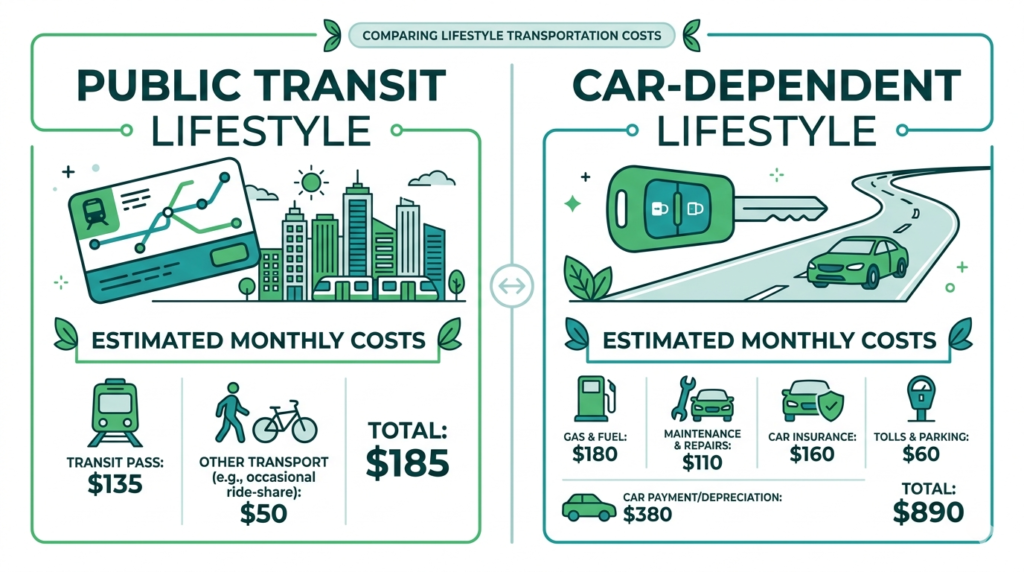
If you live in a major city with good public transit (New York, Chicago, Washington DC, San Francisco, Boston):
- A monthly transit pass runs $90 to $130/month
- You may not need a car at all, saving you $500 to $800/month in car related expenses
- Uber and Lyft fill the gaps when transit doesn’t reach
If you live almost anywhere else:
- A car is essential
- Monthly car expenses stack up fast: payment + insurance + gas + maintenance
True monthly cost of owning a car:
| Expense | Monthly estimate |
|---|---|
| Car payment (used, financed) | $250 to $450 |
| Auto insurance | $100 to $250 |
| Gas | $80 to $200 |
| Maintenance (averaged) | $50 to $100 |
| Parking | $0 to $200 |
| Total | $480 to $1,200/month |
Money saving options:
- Buy a reliable used car in cash if you can. This eliminates the monthly payment entirely
- Use GasBuddy to find the cheapest gas station near you every fill up
- Consider a fuel efficient or hybrid vehicle, gas adds up dramatically over a year
Utilities and Phone: The Bills That Quietly Add Up
Utility costs in the US are something most immigrants significantly underestimate. Here’s what a typical month looks like:
Monthly utilities breakdown:
- Electricity: $60 to $150 (higher in summer with AC or winter with electric heat)
- Gas (heating/cooking): $30 to $100 (seasonal, much higher in cold winters)
- Water/sewer: $30 to $70
- Internet: $40 to $80 (shop around, prices vary wildly by provider and location)
- Total utilities: $160 to $400/month depending on climate and home size
Phone plans, you’re probably overpaying: Most immigrants default to the big carriers (AT&T, Verizon, T-Mobile) and pay $60 to $90/month for a single line. But MVNOs (Mobile Virtual Network Operators) use the exact same towers at a fraction of the price.
Best affordable phone plans for immigrants:
- Mint Mobile, $15 to $30/month, runs on T-Mobile network
- Visible, $25/month unlimited, runs on Verizon network
- Cricket Wireless, $30 to $55/month, runs on AT&T network
- Google Fi, $20 to $65/month, great for people who travel internationally

The Hidden Costs of Living in America Nobody Warns You About
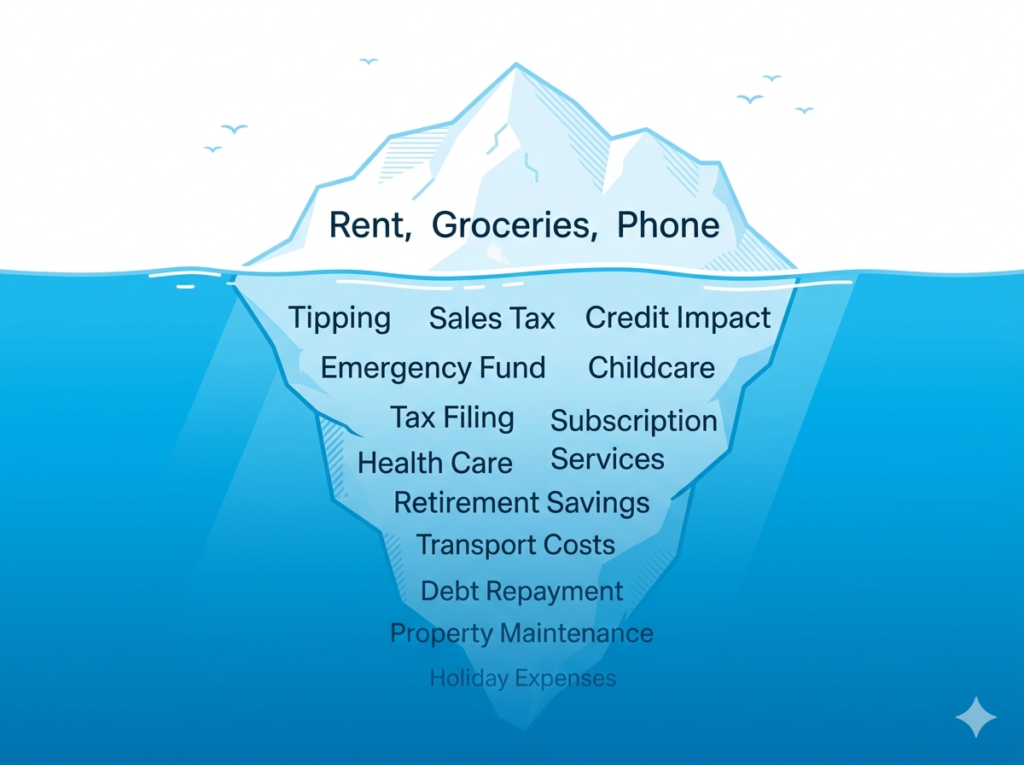
This is the section most cost of living guides skip entirely. These are the expenses that blindside immigrants most often.
1. Tipping culture Tipping in America is not optional, it is a deeply embedded social expectation. At restaurants, 18 to 20% tip is standard. Delivery drivers, hair stylists, movers, and many service workers depend on tips as a core part of their income. Budget an extra 20% on top of any service bill.
2. Sales tax added at the register Unlike in most countries, US prices do not include sales tax. The rate varies by state and city, from 0% in states like Oregon and Montana to over 10% in some California cities. What you see on the price tag is not what you pay at checkout.
3. Credit score impact on everything Your credit score affects not just loans, it affects your rent approval, your car insurance rate, your phone plan, and sometimes your job prospects. As a new immigrant with no US credit history, you will pay more for almost everything until your score is established. This is one of the most important hidden costs of living in America for immigrants.
4. Tax filing Unlike many countries where taxes are automatically calculated, in the US you are responsible for filing your own tax return every year by April 15th. If you work as a freelancer or self employed, you may also owe quarterly taxes. Missing these deadlines results in penalties.
5. Emergency costs The US has no universal safety net for unexpected expenses. A car breakdown, a dental emergency, or a medical visit without full insurance coverage can cost thousands of dollars overnight. An emergency fund of $1,000 to $3,000 is not optional, it’s critical.
6. Childcare If you have children, childcare in the US is extraordinarily expensive. Full time daycare can cost $1,000 to $2,500/month per child depending on location. This is one of the biggest financial shocks for immigrant families.
How To Budget for All of This: Tools That Actually Help
Knowing the numbers is step one. Tracking them every month is what actually keeps you on budget. Here are the best tools for immigrants managing the US cost of living:
YNAB (You Need A Budget): Best for Full Control
YNAB for immigrants is one of the most recommended budgeting tools among people managing complex financial lives, especially those balancing US expenses with sending money home. You assign every dollar a job before the month starts, which means nothing gets spent by accident.
- Best for: Anyone who wants total control over their money
- Cost: ~$14.99/month or $99/year
- Standout feature: It actively teaches you to budget, not just track
Mint: Best Free Budgeting App for Immigrants
The Mint budgeting app for immigrants is the go to free option for seeing your full financial picture in one place. Connect your bank accounts and Mint automatically categorizes every transaction, rent, groceries, utilities, insurance, so you always know where your money went.
- Best for: Immigrants who want a free, automated financial overview
- Cost: Free
- Standout feature: Automatic spending categorization with monthly budget alerts
Chime: Best Free Bank Account for Managing Your Budget
A great bank account makes budgeting easier. Chime for immigrants is one of the most accessible options, no monthly fees, no minimum balance, early direct deposit, and an automatic savings feature that rounds up every purchase and saves the difference.
- Best for: Day-to-day banking with built in savings habits
- No SSN required in many cases, just a passport and proof of address

City by City: Cheapest Places to Live in the US for Immigrants
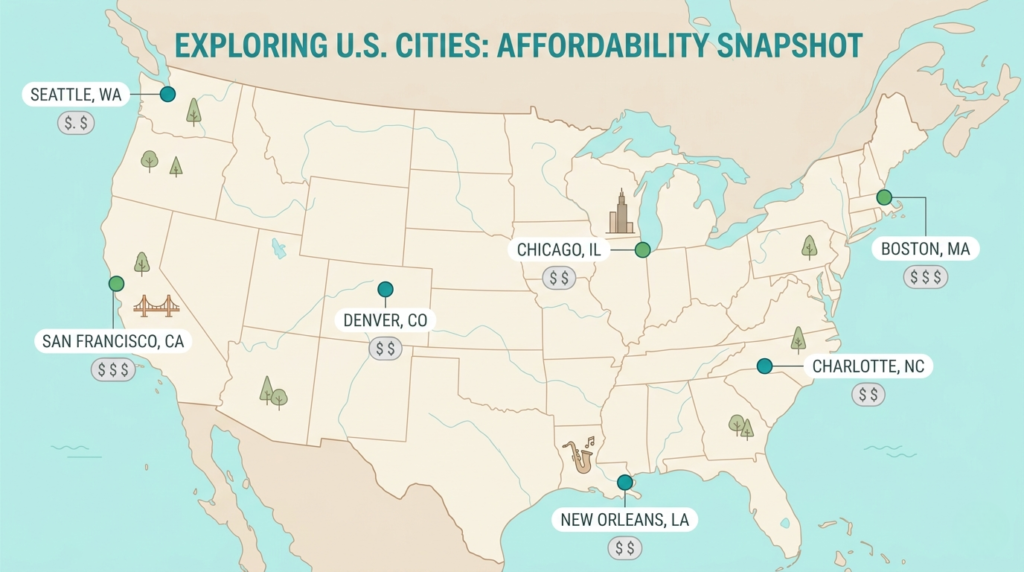
If you haven’t settled yet, where you choose to live is the single biggest financial decision you’ll make. Here are the most affordable cities with strong immigrant communities, places where the cost of living in America for immigrants is genuinely manageable on a modest income.
Top affordable cities with large immigrant communities:
| City | Avg 1BR Rent | Immigrant community | Highlights |
|---|---|---|---|
| San Antonio, TX | $900 to $1,100 | Large Latino community | No state income tax, low cost overall |
| Houston, TX | $1,000 to $1,300 | Extremely diverse | Large job market, no state income tax |
| Atlanta, GA | $1,100 to $1,500 | African & Latino communities | Growing tech job market |
| Columbus, OH | $900 to $1,200 | Diverse, growing | Affordable, good job market |
| Charlotte, NC | $1,100 to $1,400 | Growing Latino community | Banking hub, affordable suburbs |
| El Paso, TX | $750 to $1,000 | Majority Latino | One of the most affordable cities in the US |
| Jacksonville, FL | $1,100 to $1,400 | Diverse | No state income tax, warm climate |
States with no income tax (keeping more of your paycheck): Texas, Florida, Nevada, Washington, Tennessee, Wyoming, South Dakota.
Your First Month Budget Checklist
Here’s a practical starter checklist for your first month managing the real cost of living in the US:
Before you arrive:
- Research average rent in your target city. Budget for first + last month’s deposit
- Understand whether your employer provides health insurance
- Open a US bank account (see our article on banking without an SSN)
- Get a prepaid or MVNO phone plan. Do not pay full carrier prices from day one
First 30 days:
- Set up renter’s insurance immediately (Lemonade, from $5 per month)
- Download Mint or set up YNAB to track every expense from day one
- Apply for a secured credit card to start building your US credit score
- Locate your nearest Aldi, Lidl, or ethnic grocery store for affordable shopping
- Find your nearest Federally Qualified Health Center (FQHC), low cost clinics for the uninsured
- Research whether you qualify for ACA health insurance subsidies
First 90 days:
- Review all utility bills and shop for better internet rates if over $70/month
- Compare phone plans, switch to an MVNO if you’re on a big carrier
- Start a small emergency fund, even $500 is a meaningful safety net
- Research free tax preparation services in your area for April tax filing

The Bottom Line
The cost of living in the US is real, and it is higher than most immigrants expect. But it is absolutely manageable, if you know what’s coming.
The biggest financial mistakes immigrants make aren’t about spending too much on luxuries. They’re about being caught off guard by health insurance costs, not knowing which city to choose, overpaying for car insurance because of no US history, and not having a single dollar in an emergency fund when something goes wrong.
Now you know what to expect. You know the numbers, the hidden costs, the affordable cities, and the tools, from Mint and YNAB for budgeting, to Chime for banking, to Lemonade for renter’s insurance, to The Zebra for car insurance, that can make your financial life here significantly easier.
America is expensive. But it’s also full of tools, resources, and communities that can help you build something real here.
What surprised you most about the cost of living when you arrived? Share it in the comments, your experience might help the next person reading this.
Disclaimer: This article contains affiliate links. If you sign up or purchase through these links, I may earn a small commission at no extra cost to you. I only recommend products and services I genuinely believe serve immigrants well. This is not financial or legal advice.