
From Broke Newcomer To Homeowner: One Migrant’s Journey
Carlos arrived at Houston’s George Bush Intercontinental Airport on a Tuesday afternoon in March 2019 with two suitcases, $1,400 in cash, and the phone number of a cousin he had met exactly twice.
He was 31 years old. He had left behind a small construction business in Guatemala that had never quite become what he had hoped it would. He had left behind his mother, his sister, a circle of friends who had thrown him a going away dinner he barely remembers because he was too nervous to eat. He had carried those $1,400 dollars across a border and through a checkpoint and onto a plane, and now he was standing in a humid airport in Texas with his whole future sitting inside two rolling suitcases.
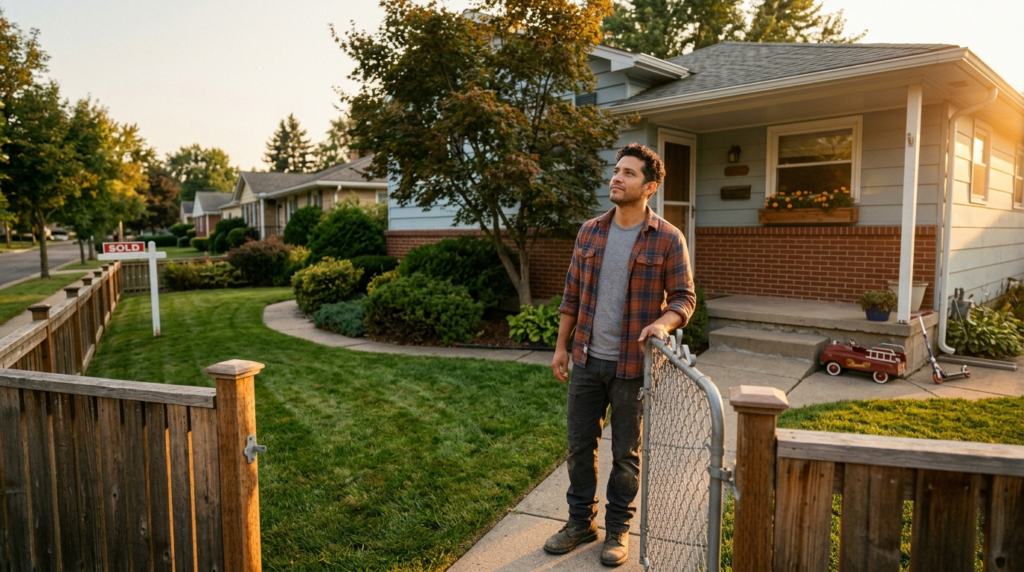
By March 2024, five years later almost to the week, Carlos signed the closing documents on a three bedroom house in Katy, Texas. His daughter, who had been born in Houston eighteen months after he arrived, sat on the floor of the empty living room playing with a set of measuring tape his realtor had given her as a joke.
He called his mother from that empty room. She cried. He did not.
He had used up his crying earlier, in the parking lot before he walked in to sign.
This is his story. And more importantly, this is the map he did not have when he started.
The First Year: Survival Mode
His cousin Jorge lived in a two bedroom apartment in southwest Houston with his wife and their three year old son. Carlos slept on their couch for the first four months and paid $300 a month for the privilege, which Jorge used entirely for groceries and which Carlos accepted as a fair arrangement.
He found work within two weeks. A construction crew in the Heights neighborhood needed a laborer who could read blueprints, which Carlos could do better than most people on the site. He made $17 an hour, cash, six days a week. He worked until his hands cracked in the dry winter air and kept working. He sent $500 home to his mother every month without fail. He saved everything else.
By September of that first year he had enough to move into his own room in a shared house with three other men, all of them in similar situations. He paid $550 a month. He was 32 years old, sleeping in a room smaller than his old kitchen in Guatemala, and he was the happiest he had been since he arrived because for the first time the money he earned and the money he spent were both completely his own to control.
He did not have a bank account yet. He cashed his checks at a check cashing place on the corner and paid $12 each time for the privilege. He did not know there was a better way. Nobody had told him.
The Thing Nobody Warned Him About
The first time Carlos encountered the American credit system was at a cell phone store.
He wanted a phone plan. Something with data, not the prepaid situation he had been managing. The sales representative ran a check and came back looking mildly apologetic.
“You have no credit history,” she said.
Carlos thought this was good news. No history of bad credit seemed better than bad history.
“We would need a $500 deposit,” she said.
He walked out with his prepaid phone still in his pocket, confused and a little offended. He had money. He had a job. He paid everything he owed on time. How was he not creditworthy?
The answer, he eventually learned, is that creditworthy in America does not mean trustworthy as a person. It means traceable as a borrower. And without a Social Security Number and a history of US accounts, he was not traceable. He did not exist in the system.
Understanding immigrant credit building was the education nobody offered him and nobody warned him he would need. He had to find it himself, one conversation and one article at a time.
The Bank Account That Changed Everything
Four months into his time in Houston, a coworker named Ramón mentioned almost in passing that he had opened a bank account at a credit union nearby without needing an SSN. Just an ITIN and a foreign ID.
Carlos had applied for his ITIN shortly after arriving so he could file taxes properly. He had not realized it could also unlock a bank account.
He went to the credit union the following Saturday morning. Forty minutes later he had a checking account, a debit card, and a routing number that his employer’s payroll department could use for direct deposit.
The $12 check cashing fee disappeared from his life that day. Over the next two years, that was roughly $600 he kept that he would otherwise have given away one transaction at a time.
He also opened an account with Majority around the same time, a digital banking app built specifically for migrants that required no SSN and included international calling to Guatemala as part of the membership. Calling his mother had been costing him real money each week. Now it was simply included.
These two moves, the credit union account and the Majority membership, were the first time the American financial system felt like it was working for him rather than against him.
Learning to Build Credit From Nothing
It was Ramón again who mentioned secured credit cards, about six months after the bank account conversation. Ramón had been in the US for four years and had just been approved for an apartment lease without a cosigner. Carlos asked how.
“Credit score,” Ramón said, in the same tone you might say something obvious.
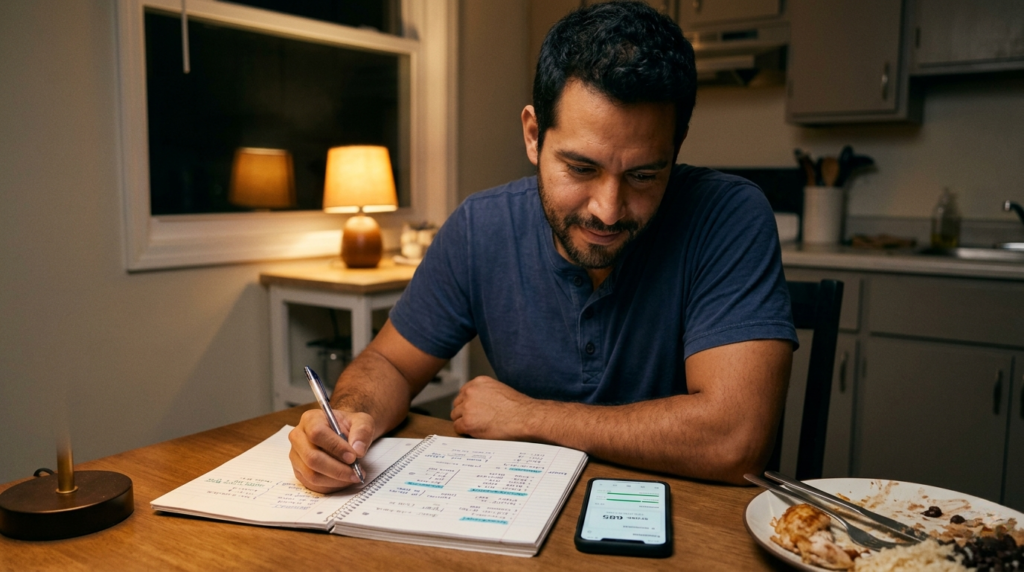
Carlos went home and read everything he could find on building a US credit score from zero as an immigrant. What he discovered was that the process was mechanical, not mysterious. It required specific types of accounts, correct behavior, and time. That was essentially the whole formula.
He opened a secured card that accepted his ITIN. He put down a $200 deposit. He used the card for one tank of gas each month, paid the statement balance in full before the closing date, and otherwise left the card alone. The utilization never exceeded 10%. The payment was never late.
He also found a credit builder loan through Self, which let him make small monthly payments into a savings account that was reported to the credit bureaus as installment credit. He had read that having both a credit card and an installment loan on your report builds your score faster because it shows you can handle different types of credit. He did not fully understand why this was true. He trusted the logic and moved on.
He monitored everything through Credit Karma, which showed his score from two bureaus updated weekly at no cost. He watched the number move. Slowly at first, then with more momentum as his account ages grew and his payment history accumulated.
At month eight, his score crossed 600 for the first time. He took a screenshot and sent it to Ramón.
“Now you’re real,” Ramón replied.
Year Two: Moving Faster
In his second year in the United States, Carlos moved from the shared house into his own one bedroom apartment. His credit score was 648. The landlord asked for two months deposit instead of one, which Carlos paid without argument. It was still a lease. In his own name. With no cosigner.
He also got a job offer from a mid size construction firm that had noticed his blueprint reading skills and offered him a foreman position at $27 an hour with W-2 employment, health insurance, and a 401k with employer matching.
The 401k conversation with HR lasted twelve minutes and Carlos understood approximately four of them. But he understood the part where the representative said the company would match 100% of his contributions up to 5% of his salary. He had been in America long enough to know that free money from an employer was something you accepted without asking too many questions.
He enrolled at 5% that afternoon.
His tax situation had become more complex by this point. He was now filing as a resident alien, which his new salary made relevant, and he had investment related questions he was not equipped to answer himself. He found an accountant through a local immigrant services organization who prepared his return for a flat fee and identified a deduction Carlos had been missing for two years. It cost him a fraction of what he had been overpaying.
He used IRS Free File the following year when his situation had stabilized and his return was more straightforward. The VITA program at the local library had helped him understand the difference between situations that require professional help and situations that do not. His fell into the second category most years.
The Savings Strategy He Kept Simple on Purpose
Carlos will tell you himself that he is not a sophisticated investor. He has never bought an individual stock. He has never tried to time a market. He watched enough of his coworkers get excited about cryptocurrency in 2021 and then go quiet about it in 2022 to feel confirmed in his instinct to stay away from things he did not understand.
What he did was simple to the point of being almost boring.
His employer’s 401k was invested in a target date fund matched to his expected retirement year. He chose it because it was the default and the HR representative had said it was the one most people chose. It turned out to be a reasonable choice.
Outside of work, he opened a Roth IRA through Fidelity once his income was stable enough to allow additional savings beyond the 401k. He contributed what he could each month into a single total market index fund. He had read that zero expense ratio funds meant none of his money went to management fees. He found this appealing in the same way he found anything appealing that eliminated unnecessary cost.
He also used Acorns for a time, the round up investing app that automatically invested spare change from every purchase. He liked it because it required no decisions after the initial setup. Every dollar of round up that went into that portfolio was a dollar he would otherwise have simply spent. Over eighteen months, the balance surprised him.
These three accounts, the 401k, the Roth IRA, and the Acorns portfolio, were not a strategy in the sense that a financial advisor would describe one. They were the result of someone making the most sensible decisions available to him with the knowledge and income he had at each point in time. They worked not because they were sophisticated but because they were consistent.
Year Three: The Question He Started Asking
Somewhere in year three, Carlos started asking a question he had not previously allowed himself to ask.
Could he buy a house?
It felt presumptuous. He was a migrant on a work visa. He was sending money home every month. He had only recently stopped feeling like every financial decision he made was temporary, conditional on whether he would still be here next year.
But the math was changing his thinking. He was paying $1,350 per month in rent for an apartment that was fine but not his. Every payment he made built equity for his landlord, not for himself. His credit score was now 712. He had three years of US tax returns. He had steady W-2 employment. He had a growing 401k and a Roth IRA. He had, without entirely planning to, built a financial profile that looked credible to a lender.
He started reading about mortgages for immigrants and quickly discovered that homeownership for migrants in the United States is far more accessible than he had assumed. Lawful permanent residents can access the same conventional mortgage products as citizens. Even visa holders can purchase property and obtain financing, though the lender options are more specific.
He was on an H-2B visa at the time, which added complexity. His employer was in the process of sponsoring him for a green card but the timeline was uncertain. He called three mortgage brokers. Two told him they could not help him without a green card. The third explained what was actually possible.
That third broker changed everything.

What He Learned About Buying a Home as an Immigrant
The mortgage broker’s name was Sarah and she had spent most of her career working with immigrant borrowers in the Houston area. She explained his situation in terms that were plain enough to follow and honest enough to trust.
First: his visa status made him eligible for what lenders call foreign national loans or ITIN loans, which are mortgage products designed for borrowers without a green card or SSN. These typically require a larger down payment than conventional loans, often 20% to 30%, and carry interest rates somewhat above the conventional rate. They are real mortgage products, not predatory instruments, but they come with real costs that conventional financing does not.
Second: if his green card came through before he was ready to buy, conventional financing would become available and would be significantly more favorable. The rates would be lower, the down payment requirement would drop, and his options would expand considerably.
Third: his credit score of 712 was genuinely strong. His three years of US tax returns were genuinely useful. His debt to income ratio, which calculated how much of his monthly income was committed to existing debt payments, was favorable because he had no car loan, no personal loan, and no credit card balance carried month to month.
She recommended he wait twelve months, continue building his savings, get a pre approval letter once his visa situation clarified, and watch for what was happening with his green card application.
He did exactly that.
The green card arrived fourteen months later. He called Sarah the following week.
The Down Payment: Where It Actually Came From
This is the part of Carlos’s story that most people find surprising, because the conventional narrative about homeownership is that the down payment is the impossible barrier. You need 20% of the purchase price before you can even begin. For a $300,000 house, that is $60,000. Where does a construction worker saving $500 a month find $60,000?
Here is where his actual answer differed from the conventional assumption.
With his green card and a credit score now at 724, Carlos qualified for a conventional loan at a much more favorable down payment requirement. His lender approved him for a 5% down payment on a conventional 30 year mortgage with private mortgage insurance, or PMI, added to the monthly payment until his equity reached 20% of the home value.
5% on a $285,000 home was $14,250.
He had been saving deliberately for two years with homeownership in mind, keeping the savings in a high yield savings account at Marcus by Goldman Sachs that was earning considerably more than a standard savings account. He had also used the Acorns portfolio to accumulate approximately $4,200 over three years of round ups and periodic deposits. He liquidated that account and transferred the proceeds to his savings.
He also received a gift contribution from his cousin Jorge and Jorge’s wife, who had watched Carlos sleep on their couch four years earlier and felt it was time to contribute something more meaningful than just storage space. They gave $3,000. Carlos accepted it with the kind of difficulty that only people from cultures where accepting help feels like weakness will understand.
He walked into closing with $14,250 in down payment funds, $3,800 in closing costs, and approximately $6,000 in reserve funds that his lender required him to demonstrate before approving the loan.
The total cash outlay was just over $24,000. It had taken him three years of focused savings to accumulate it while also maintaining his monthly remittances to his mother, his 401k contributions, and his Roth IRA deposits.
It was not $60,000. But it was not effortless either. It was the product of every small decision made consistently over several years.
The Night Before Closing
Carlos told me he barely slept the night before closing.
Not because he was anxious about the decision. He had made the decision months earlier and he was confident in it. He lay awake because he was doing the math again in his head, the same math he had done a hundred times in the previous six months, and he kept arriving at the same place.
Five years before that night, he had landed in Houston with $1,400.
Tomorrow he would sign documents promising to repay $270,750 over thirty years. He would become responsible for property taxes, homeowners insurance, maintenance, and all the other costs that renters transfer to landlords and owners absorb themselves.
He would also stop paying money to someone else for the privilege of living in a space that would never belong to him no matter how long he stayed.
He thought about his mother, who had never owned property. He thought about his daughter, asleep in the next room, who would grow up with a bedroom that was hers. He thought about the version of himself who had stood in that airport in 2019, trying to decide if the $12 taxi to Jorge’s apartment was worth it or if he should take the bus.
He decided the math was fine. He turned off the light and eventually slept.

What He Would Tell Someone Starting Now
I asked Carlos what he would have wanted someone to tell him when he first arrived. He thought about it for a long time before answering.
He said the thing that hurt him most in year one was not knowing which things were urgent. Everything felt equally important and equally overwhelming. Finding an apartment, getting a phone, understanding taxes, learning about credit, figuring out banking — all of it competed for his attention and he had no framework for deciding which to tackle first.
If someone had sat him down on his first week and given him a sequence, he thinks he would have moved significantly faster. So here is the sequence he would give:
First, open a bank account. Even a basic digital account that accepts your ITIN or foreign passport. Stop paying fees to cash checks. This is the foundation for everything else. He would point someone toward Majority for the combined banking and international calling value, or toward a local credit union if they wanted a more traditional option.
Second, apply for your ITIN if you do not have one. This document unlocks credit cards, bank accounts, and the ability to file US taxes correctly. It takes time to arrive from the IRS. Start the application early.
Third, open a secured credit card and a credit builder loan at the same time. The combination builds your credit history faster than either one alone. Keep the card usage low. Pay the statement balance in full before the statement closes, not just before the due date.
Fourth, once you have a stable income, contribute to your employer’s 401k at least up to the employer match. It is free money from your employer and a tax reduction from the government. There is no rational argument against it.
Fifth, open a high yield savings account and name a specific goal. Not “savings” as an abstraction, but a target: deposit, closing costs, emergency fund. Having a named goal changes how aggressively you protect the balance.
Sixth, when your credit score crosses 700 and you have two years of US tax returns, start talking to a mortgage broker, specifically one with experience working with immigrant borrowers. Not to buy immediately. To understand what your timeline looks like and what you need to do to shorten it.
That is the whole map. Not easy. Not fast. But sequential and followable if you know the steps exist.
The Resources He Used Along the Way
Carlos is not someone who gives product recommendations casually. He tends toward understatement in most things, including gratitude. But when I asked him directly which financial tools had been genuinely useful on this journey, he answered without hesitation.
Majority was where he started banking because it was the only thing that seemed built for him specifically. The international calling included in the membership meant he could talk to his mother without calculating the cost of every conversation.
Credit Karma was where he tracked his credit score every week for two and a half years. Not obsessively, he says. Just as maintenance, the way you check your oil.
Self was the credit builder loan he used to add installment credit to his file alongside the secured card. He paid $89 over the loan term in interest and fees and gained a credit history that accelerated his score meaningfully. He considers it money well spent in the same way he considers a professional tool well spent.
Acorns was the round up account he never thought about, which is exactly why it worked. The absence of decision making was the feature, not the limitation.
Fidelity was where he put his Roth IRA and where he invested in a zero fee index fund he has never once considered selling. He opened the account with $50 and added to it every month he could afford to. The balance today is something he checks occasionally and smiles at.
Marcus by Goldman Sachs was where he kept his down payment savings because the interest rate was meaningfully better than his checking account and the money was accessible when he needed it.
None of these are magic. None of them are secrets. They are, he says, just the tools that were there when he looked for them.
A Note on What This Story Actually Is
Carlos is a composite. The specific details of his life, the airport arrival, the couch, the 643 on the screen, the night before closing, are constructed from the real experiences of several immigrants I have spoken with over the years who made this same journey in different cities, from different countries, on different timelines.
What is not composite is the financial sequence. Every step in this story is real, available, and replicable. The bank accounts are real. The ITIN pathway is real. The secured card and credit builder loan strategy is documented and effective. The mortgage options for green card holders and visa holders are real products offered by real lenders today.
The point of telling it as one person’s story rather than a listicle of tips is that the human version is easier to follow. You can see how the pieces connect. You can see how one decision made in year one affects what becomes possible in year three. You can see that the timeline is longer than most people want it to be and shorter than most people fear it will be.
Five years is not forever. For most people reading this who arrived recently, five years from now is a date you can picture. A date that is not impossibly distant. A date by which things that feel impossible today might have become simply ordinary.
Carlos’s daughter is five now. She does not remember the airport. She does not remember the shared house or the couch at Jorge’s. She knows only the house in Katy with the backyard and the room that is hers.
That is what the five years built.
A Final Thought
If you are reading this in year one of your own journey, I want to say something directly.
The gap between where Carlos started and where he ended is not explained by luck or by extraordinary talent or by any advantage that was unavailable to others in his situation. It is explained by sequence. He learned the right things in roughly the right order and did them consistently for long enough that the compound effect of small correct decisions became something large and real.
The sequence is learnable. The tools are accessible. The timeline is longer than you want but shorter than you fear.
You do not have to figure all of this out at once. Start with the first step. Then the second. The map exists now even if nobody handed it to you at the airport.
If this story resonates with you, I would love to hear where you are in your own journey. Leave a comment below. This community grows stronger every time someone shares what they are going through and what they are figuring out.
This article includes links to financial products and services mentioned in the story. Where affiliate relationships exist, they are disclosed. No recommendation in this article was shaped by affiliate consideration — only by genuine usefulness to someone in the situation described. This is not financial advice.