
How to Live Comfortably on a Starter Salary
The hardest part of landing my first real job wasn’t the work. It was making one paycheck last until the next.
I wasn’t irresponsible. I had budgeted in my head, I knew what rent cost, and I fully intended to save. What I didn’t have was a realistic picture of the hidden costs of living independently, a repeatable way to manage fixed versus variable expenses, or the financial habits that people who’ve handled money for years take for granted.
The first month, my money ran out four days before payday. The next three months went the same way, and I covered the gap by draining a small emergency cushion. By month six, I finally had a system that worked. It wasn’t a glamorous life of luxury spending and endless takeout. It was a predictable, sustainable rhythm that paid my bills, funded my savings, and left room for a social life without constant anxiety.
This guide lays out that system: how cash flow really works on an early-career income, how to build a budget that holds up, which fixed costs deserve the most attention, and which habits keep lifestyle creep from eating your raise before you even get it. If you’re new to budgeting altogether, our guide to creating your first budget is a good companion to this one.
How Cash Flow Actually Works
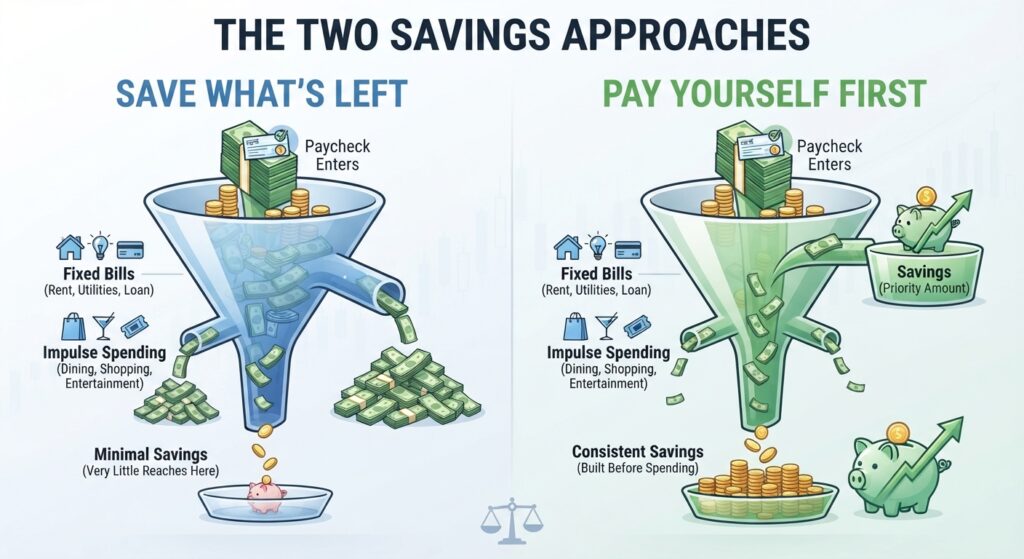
Most people on a starter salary do the same thing. They get paid, cover rent and the big bills, and try to save whatever is left at the end of the month. That approach has the highest failure rate, because there’s rarely anything left.
Here’s what happens to the money:
- Your paycheck lands in your checking account.
- Fixed obligations such as rent, utilities, insurance, and loan payments hit right away or within the first week.
- What remains feels like spending money, but it still has to cover groceries, transportation, health costs, and every irregular expense over the next thirty days.
- Without a deliberate plan, variable spending quietly absorbs the balance before you notice.
There’s also an outside pressure at work. Modern consumer culture nudges you to spend every dollar you earn, and a little more on credit. Ads, “buy now, pay later” buttons, and one-click checkout are designed to make spending feel effortless. You don’t need to resent that, but your financial plan does need to account for it.
The fastest way out of the trap is to change the order of operations. Pay yourself first. Automate a transfer to a separate savings account the day your paycheck arrives, so the money is gone before you can talk yourself into spending it. Everything else, including bills, groceries, and fun, gets built around what remains.
Step 1: Build a Zero-Based Starter Budget
Whatever system you used in college or at a part-time job, it probably won’t hold up under the costs of independent adult life. Replace it before you get caught short again.
Starter budgets work best when they follow a few firm rules:
- Start with net income. Use your take-home pay after taxes and mandatory deductions, never your gross salary. Rent is paid with the dollars that actually reach your bank account.
- Give every dollar a job. In a zero-based budget, your income minus your planned expenses equals zero. That doesn’t mean you spend everything. Savings and debt payments count as assigned dollars, and nothing is left floating as unexplained “miscellaneous.”
- Use simple categories. The classic starting framework is the 50/30/20 rule: about 50% of take-home pay for needs, 30% for wants, and 20% for savings and debt repayment. Our article on the 50/30/20 rule for immigrants explains how to adapt it when you’re also sending money to family or paying unusual startup costs.
- Check in weekly, not monthly. Waiting until month’s end to look at your balance is like checking the scoreboard after the game is over. Catching an overspending trend in week two lets you correct course while it still matters.
What this looks like in real numbers
Say your take-home pay is $2,800 a month. A starting 50/30/20 split would look like this:
| Category | Share | Monthly amount | What it covers |
|---|---|---|---|
| Needs | 50% | $1,400 | Rent, utilities, transit, groceries, insurance, minimum debt payments |
| Wants | 30% | $840 | Eating out, entertainment, subscriptions, hobbies, travel |
| Savings and debt | 20% | $560 | Emergency fund, retirement, extra debt payments |
In many cities, rent alone can take 40% or more of a starter salary, which makes 50% for all needs unrealistic. If that’s you, adjust. Try 60/25/15 and work toward 50/30/20 as your income grows. The exact ratios matter less than having a plan for every dollar and reviewing it regularly.
If you’re building your first budget without any credit history, see how to build a budget that works with no credit. Our budget tracker can also do the math for you. Google Sheets, Canva, and tools like NerdWallet or YNAB (You Need A Budget) offer templates too, and many credit unions provide free financial counseling to help you set up your first independent budget.
Step 2: Set Up Your Financial Dashboard Early
Tracking tools aren’t optional if you want to live comfortably on a starter salary. They show you where your money goes, catch recurring charges you’ve forgotten, and expose the small leaks that drain a tight budget.
Set everything up before your first full month of independent bills, because every unexpected expense will test your system, and automation starts protecting you the moment your rules are live.
- Accounts: Keep checking and savings separate. Ideally, hold your emergency savings at a different bank so that impulse transfers take a little effort.
- Alerts: Turn on low-balance and large-transaction notifications for every account. Knowing right away when a subscription renews or your balance dips below a safety line prevents accidental overdrafts.
- Subscriptions: Audit every recurring charge in your first week. Cancel streaming services, apps, and memberships you haven’t used in thirty days. Five forgotten $15 subscriptions add up to $900 a year.
- Bills: Automate every fixed bill, including rent, utilities, internet, and insurance. Late fees are a tax on disorganization, and a starter budget can’t absorb them.
- Emergency cushion: Before you pay down low-interest debt aggressively or start investing heavily, build a starter emergency fund of $500 to $1,000 in cash. That one buffer keeps a car repair or medical copay from pushing you onto a high-interest credit card.
Once that starter fund is in place, keep growing it toward three to six months of essential expenses. And don’t leave it in a checking account earning nothing forever. Our piece on why keeping all your money in a savings account keeps you poor explains how to put money that’s not needed soon to better use.
To see where you stand right now, try the financial health check. It takes a few minutes and shows you which area to work on first.
Step 3: Get Your Biggest Fixed Cost Under Control
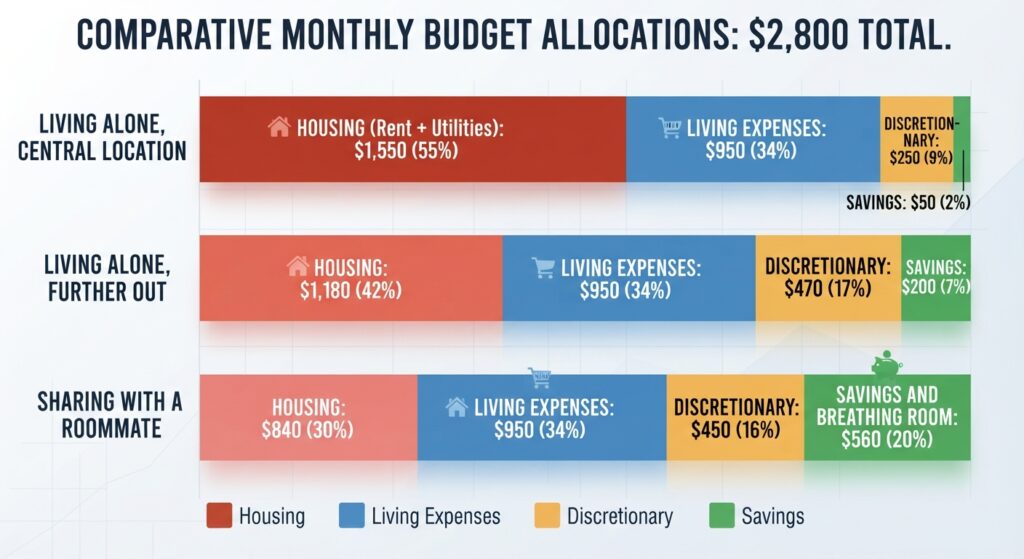
Not every lifestyle choice is equally sustainable on an entry-level income, and the biggest one is where and how you live.
Renting your own place in a central neighborhood is the default many young earners assume they’re supposed to want. On a starter salary, it often consumes so much of your income that little remains for food, savings, or the surprise expenses life always delivers. It’s the single biggest source of financial pressure for early-career workers.
A few alternatives shrink that cost fast:
- Share housing. Splitting rent, utilities, and internet with one or two reliable roommates can free up hundreds of dollars a month, money that can go straight into savings or into a better quality of life elsewhere.
- Look slightly farther out. A neighborhood twenty minutes further from the center often costs noticeably less, especially if it’s still on a bus or train line.
- Trim what you can’t move. Even after you’ve chosen a place, you can cut housing-related costs. Our list of 15 ways to lower your monthly housing costs covers everything from negotiating rent to reducing utility bills.
- Furnish smart. Start with essentials and buy secondhand. Our guide on how to furnish an apartment on a budget walks through what to buy first and what can wait.
Transportation is the other big fixed cost. If you can, avoid a high car payment, expensive insurance, and parking fees right out of the gate. Public transit, a reliable used car bought with cash, or biking and walking can take thousands of dollars off your yearly overhead.
Protect your fixed-cost margins first. When your salary grows, upgrading your living situation becomes a comfortable choice rather than a financial stretch. And if you’re eventually thinking about homeownership, see our realistic breakdown of renting versus buying before you commit.
Step 4: Use Your Community as a Financial Resource
Financial stability is easier to maintain when you share resources instead of buying everything alone. That’s not a rule of economics so much as common sense, and it matters most when your budget is tight.
Your community likely has more to offer than you realize:
- Public libraries: Many offer far more than books. Depending on where you live, that can include free software, online courses, streaming media, tool-lending programs, and financial literacy workshops.
- Shared food strategies: Cooking nights with friends, bulk-buying with roommates, and community gardens can cut grocery costs significantly without lowering the quality of what you eat.
- Free local recreation: Free museum days, outdoor concerts, parks, and community fitness groups can replace expensive weekend habits.
- Professional and alumni networks: These often share housing boards, secondhand furniture groups, and ride-sharing tips that keep your early-career setup costs well below retail.
Health costs deserve their own mention. An unexpected medical bill can wreck a starter budget faster than almost anything else. Check what your employer offers, and if coverage isn’t included, see how to get health insurance as an immigrant and the guide to free and low-cost healthcare options.
If your income needs a boost, you’re not limited to your main job. Our article on gig work and side hustles covers flexible options that can help fill a gap or speed up your savings goals.
Step 5: Make Money Management a Habit
Living on a starter salary is almost always tighter than you expect. Planning for that, and managing it systematically, keeps you out of the lifestyle inflation and debt cycles that trap people for years.
- Set a small monthly savings target. Automating even $25 or $50 per paycheck builds the habit before the amount gets big. Consistency matters more than the starting number.
- Review your spending weekly. A quick look at your banking app shows where convenience spending is creeping in and which habits are draining your cash.
- Use the 48-hour pause. For any non-essential purchase over $50, wait two days before buying. Many impulses fade once the initial excitement cools.
- Plan for irregular expenses. Holidays, birthdays, car maintenance, and annual insurance premiums aren’t surprises. They happen every year. Setting aside a small amount each month keeps them from wrecking your budget.
- Debrief every month. Whether you stayed on track or overspent, write down what worked and where things went wrong. Personal finance is a skill that improves with practice. The people who reach financial comfort fastest treat budget adjustments as routine maintenance, not moral failure.
One warning: don’t obsess over tiny cuts while ignoring big leaks. Skipping a $4 coffee won’t matter much if your rent, car payment, or unused subscriptions are quietly costing you hundreds. Fix the largest items first.
If you carry debt, have a plan for it. Our debt payoff calculator shows how extra payments shorten your timeline and reduce interest, and the credit report builder can help you understand and improve your credit over time.
Free Resources for Financial Health
You don’t have to figure this out alone, and much of the help is free:
- Nonprofit credit counseling: Organizations like the National Foundation for Credit Counseling (NFCC) offer free or low-cost financial reviews, debt management advice, and budgeting support.
- Libraries and community centers: Many host free financial literacy workshops, and some offer free tax preparation through programs like VITA for people who qualify by income.
- Employee Assistance Programs (EAPs): Many employers provide free financial wellness coaching and planning tools. Ask HR what’s available.
A Note on Social Media Comparison
If your peers online seem to live far beyond what a starter salary allows, step back from comparing. It’s one of the best mental investments you can make.
Much of what people display online is funded by high-interest debt, family support, or financial strain that never shows up in the photos. Their comfort often looks very different behind closed doors.
Frugality on a starter salary isn’t a life sentence. It’s a short, strategic season that builds the discipline, cushion, and financial knowledge you’ll need to manage much bigger paychecks later.
From Starter Salary to Wealth Building
Once your budget is stable and your emergency fund is in place, your money can start working for you. Even small amounts matter early, because time does much of the heavy lifting. Our explanation of how compound interest builds wealth shows why, and you can test your own numbers with the compound interest calculator.
A few good next steps:
- If your employer offers a retirement plan, read what a 401(k) is and whether you should use yours.
- When you’re ready to invest beyond retirement accounts, start with the beginner’s guide to the stock market, then read about common investing mistakes new immigrants make.
- If you’re starting later than you’d like, how to catch up on retirement savings shows how to make up ground.
For more practical money guides, browse our Save Smart and Build Wealth sections.
The Mindset That Gets You to Financial Comfort
Thriving on a starter salary takes a particular mindset: contentment with where you are, combined with steady forward momentum. It means being willing to live modestly today so your future self has real freedom.
The earner who insists on matching every lifestyle milestone of established professionals right away often ends up in credit card debt that takes years to clear. The one who commits to a clean, intentional starter budget builds savings, avoids debt stress, and is ready to accelerate as income grows.
A starter salary is a foundation, not a ceiling. It’s simply the starting line.
Disclaimer: This article is for educational and informational purposes only and does not constitute financial, legal, or investment advice. Economic conditions, living costs, and financial product terms vary by location and change over time. Verify current information directly and consult appropriate professionals for advice specific to your financial situation.